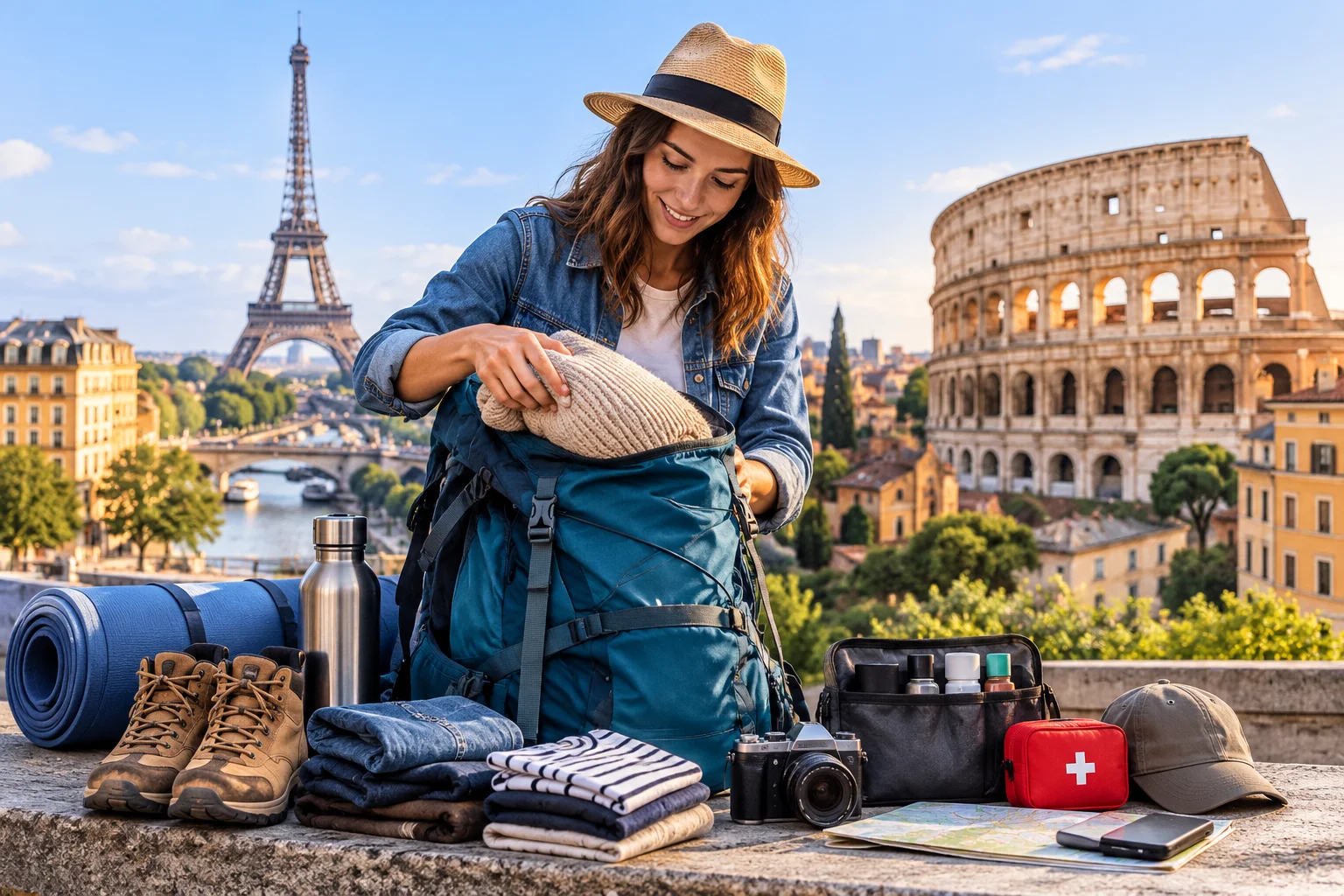
What to pack for a month in Europe comes down to a small, mixable wardrobe of quick-drying clothes, one reliable pair of walking shoes, a money belt holding your passport, and a habit of washing in a sink instead of hauling thirty outfits.
I have not personally packed for this trip, so I am sharing general knowledge rather than claiming a route of my own. What I find helpful is building around lightweight cotton pants, a pair of merino wool socks and a hooded windbreaker, then letting laundry reset the wardrobe every few days.
Cash and electronics stay lean as well. A debit card, a credit card and a half-liter water bottle (the plastic mineral-water kind sold across Europe can be reused) cover most daily needs, while a smartphone replaces an alarm clock and a map. A few plug adapters and a toiletries kit that hangs up neatly finish the core.
Which Tops and Bottoms Should You Pack for a Month in Europe
The tops and bottoms worth packing for a month in Europe are a few versatile pieces that mix into many outfits, plus pants with zippered pockets and a hidden pocket for cash.

On a route of five weeks that began in London in June, highs rarely passed 70 degrees, so a barn jacket over plain tees did more work than any single statement piece. The same layer still made sense by the time the route reached Ibiza.
I find that comfortable basics matter more than novelty. Cardigans mix and match, leggings or yoga pants double as streetwear, and low-profile tennis shoes keep outfits practical. A belt is only worth the space if the pants need one, while a single pendant can keep a plain top looking polished at almost no weight.
Underwear, Socks, Sleepwear and Swimwear That Dry Fast
Underwear, socks, sleepwear and swimwear should be thin, quick-drying pieces, because a month away means washing them in the room and hanging them overnight.

Fabric decides how fast that happens: synthetic blends such as Coolmax usually dry by morning, and light-colored pieces stay pleasant in the heat. For winter trips, I would add long underwear and gloves, plus an extra pair of socks and underwear, since damp items dry slowly in cold rooms.
A small wash kit makes the system work. A mesh bag holds dirty clothes, liquid soap handles the wash, a clothesline hangs from a hook, and sealable baggies keep damp items from spreading. Washcloths are rare in Europe, so a washcloth is worth packing, and some sinks lack a drain stopper.

Comfort items matter too. Pack flip-flops if the bathroom down the hall is shared, and make sure anything new is broken in before departure. A thin hostel sheet, when bedding is not included, can also cover a train seat or a picnic.
Layers and Jackets for Changing Weather
A light, water-resistant outer layer plus one warm piece handles most European weather better than a single heavy coat.

Tops work best as a mix of short-sleeved and long-sleeved pieces, since long sleeves that roll up double as short ones. Patterns and fabrics that are wrinkle-camouflaging also look fresher after a month in a carry-on. Anything bulky, such as jeans, can be worn on the flight instead of taking up bag room, and a rolled warm layer works as a neck rest on trains.
For cold or wet months, I would put my heaviest pair of waterproof shoes on the plane and check that the soles offer decent traction. A small umbrella is optional, because vendors appear with the rain, while a wide-brimmed hat protects against sun. Silk scarves or a tie add variety almost for free, and a sewing kit with a few safety pins repairs the seams that travel loosens.
Shoe Choices That Hold Up for a Month
One or two pairs of supportive shoes are enough for a month, provided the main pair suits long days of walking.

To optimize space, I would choose shoes that work across outfits. Tailored Bermuda shorts paired with a halter top and heels can handle an evening, while the same shorts with a plain tee and flats cover daytime, so the shoe count stays low without the wardrobe feeling repetitive.
Feet decide whether a long trip is enjoyable. Double-layer socks reduce blisters, a stick of anti-blister balm helps when friction starts, and a small first-aid kit plus hand sanitizer keeps minor problems manageable. A little duct tape, wrapped around a pen, can also rescue a broken sole in an emergency.
Wet weather changes the plan. A jacket with a hood in Gore-Tex or similar material suits rainy days, and rain is worth planning for in Britain and Ireland.
Accessories and Bags Worth the Space
Accessories and extra bags earn their place only when they do more than one job, such as a fold-up tote bag that carries laundry, groceries, picnic supplies and souvenirs.

The pattern shows up in footwear too: one traveler packed six pairs of shoes and still wore a single pair of kitten-heel sandals everywhere, from dinners in Notting Hill to cafes in Paris. When deciding what to pack for a month in Europe, I take that as a cue to bring fewer pieces that blend, such as a skirt and a tank that mix with everything else, and to cover up inside churches when needed.
Small gear deserves the same scrutiny. A separate camera needs a spare memory card, an ebook reader can replace paperbacks, and compact binoculars are optional for scenery or church interiors. Contact-lens solution is widely sold in Europe, so carrying a small bottle is enough.
Documents and Money You Should Keep Close
Documents and money should stay on your body or in a bag you carry, never in the hold, because anything you cannot lose must remain within reach from the airport onward.

Pickpockets treat a fanny pack as an invitation, so I would rather keep valuables under clothing and close any handbags with a real zip. A tiny lock helps secure backpack zippers, and a TSA-approved model can be opened by agents with a master key, whereas other locks may be broken during inspection in the hold.
Digital backups matter as well. A laptop with a flash drive lets files and photos be saved even when internet access is spotty. Medicine needs similar care: keep prescription medications in their original containers, carry them in the cabin, and seal squeeze bottles in plastic bags because cabin pressure can make them leak.
Electronics and Backups You Can Rely On
Electronics can stay minimal on a long trip because a phone already works as a flashlight and travel alarm, which leaves paper and cloth backups to cover everything else.

A day pack is where small items live. I would keep a sweater in it for art museums, which can feel chilly even in summer, plus a packet of tissues and a notepad with a pen. Soft streetwear can double as pajamas and loungewear, and foam earplugs help on noisy nights and on trains.
Paper backups protect the trip when technology fails:
- Photocopies of key documents make replacements faster if originals are lost.
- Passport-type photos speed up replacement paperwork.
- Printed reservations help when a battery dies or Wi-Fi drops.
- An entry visa, if the trip needs one, belongs with the other papers.
Space for one guilty pleasure is worth finding, whether that is a favorite audio gadget or a good book.
How Do You Handle Toiletries and Laundry on the Road?
Toiletries and laundry stay manageable on a long trip when a hanging kit, sink washing and fast-drying fabrics replace a full supply of everything.

Fabric choice does most of the work, as the comparison below shows.
| Fabric | Drying behavior | Where it fits |
| Bamboo | Dries faster than 100 percent cotton | Everyday socks |
| Cotton/nylon-blend | Dries faster than 100 percent cotton | Socks and underwear |
| Microfiber | Usually dries overnight | Tops and quick-dry cloths |
| Heavy denim | Slow to dry and hot in summer | Wear on travel days |
Personal items deserve a short list rather than a full cabinet. A hairdryer is optional, insect repellent matters only for bite-prone travelers, and an eye mask helps with early sun. Keep a vaccination record and insurance contact details with your medicine, and set aside an emergency stash of hard US cash away from the daily wallet.

Eyewear is a good example of restraint. One traveler packed four pairs of sunglasses and then wore a tortoiseshell pair, bought in the first week, almost exclusively. Pack disinfecting wipes only if surfaces on trains and planes bother you.
Optional Extras That Are Easy to Skip
Optional extras are easy to skip because most of them can be bought in Europe if the need turns out to be real.

When I pack light, I ask whether an item solves a likely problem or only an imaginable one. Convertible pants with zip-off legs are functional in southern Europe but not essential, a neck wallet is one alternative to a money belt, and a journal is a lovely souvenir rather than a necessity. A swimsuit only matters if public pools are planned, and in France men are expected to wear Speedo-type suits rather than trunks.
Electronics follow the same logic. Portable chargers keep a phone alive during long sightseeing days, a Y-jack lets two people share wired audio, and noise-canceling headphones make trains tolerable. A tablet is handy for downloaded apps and books. Anyone driving needs a driver’s license, a car mount, and perhaps a GPS device preloaded with maps.
Should You Check a Bag for a Month in Europe?
Checking a bag for a month in Europe is reasonable when the plan mixes dressy days with beach days, while a smaller bag is enough for lighter routes.

One traveler’s itinerary covered six destinations in four countries, from office work to beach-hopping, and the usual carry-on-only habit gave way to a checked bag. Even so, the wardrobe stayed small: a sheer dress that worked over a bikini and later as a going-out layer, a drop-waist dress that was an outfit on its own, and a matching skirt set whose pieces mixed with other staples.
Travel days deserve their own plan. Genie pants were comfortable enough for dinners, beach clubs and a long flight, and an airplane layer or compressible puffer coat keeps cabin chills away while saving room. Whether the container is a suitcase or a backpack, the luggage itself matters less than how many items repeat across outfits.