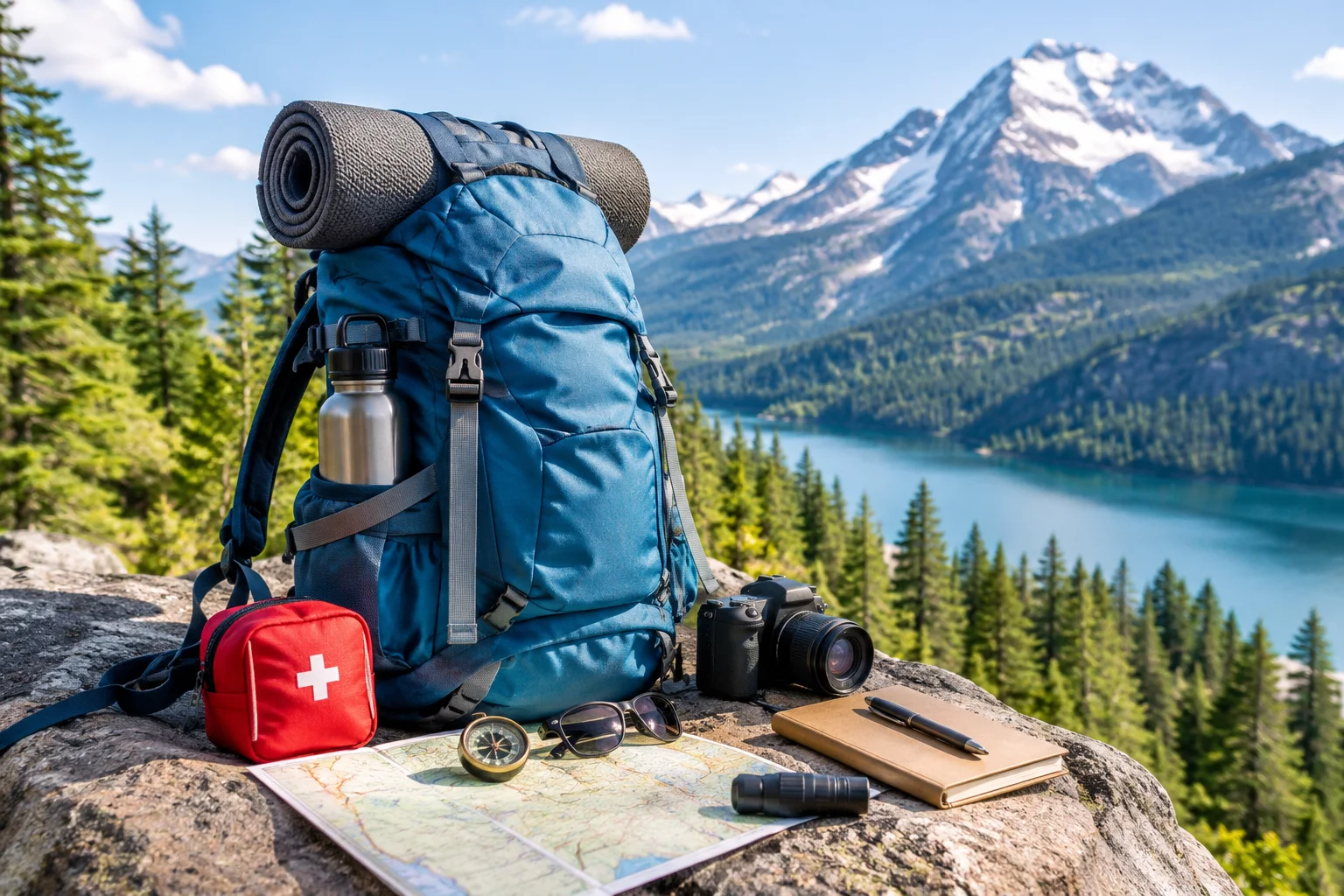
A backpacking checklist covers shelter, a sleep system, cooking and food storage, water treatment, clothing, navigation, hygiene and documents, with the safety items settled first and everything else tailored to the trip.
A typical pack holds 45 to 80 liters, and that volume is a useful ceiling when I decide what stays home. What I find helpful is sorting every item into a group before anything touches the bag. A hammock, a tarp and a bivy all count as shelter, so only one of them earns a place on a short trip.
Food planning starts with calories and ends with a look at water sources along the route, because those two facts set how much storage is needed. Treatment systems come in pump, gravity and squeeze styles, and the choice only matters once the route is known. Clothing follows the same logic: layering in synthetic or wool fabric stays warm when wet, while cotton does not.
The paperwork side is easy to forget on a backpacking checklist. A compass, any required permits and a copy of the itinerary left with someone cost almost nothing to carry. A toothbrush, spare contacts and a journal are small extras, and a camera belongs on the optional side.
Backpacking Gear That Forms the Core of the Load
The core backpacking gear is a framed bag, a roof overhead, a sleeping setup and a light source, and the aim is the lightest gear that still gets you through the night.
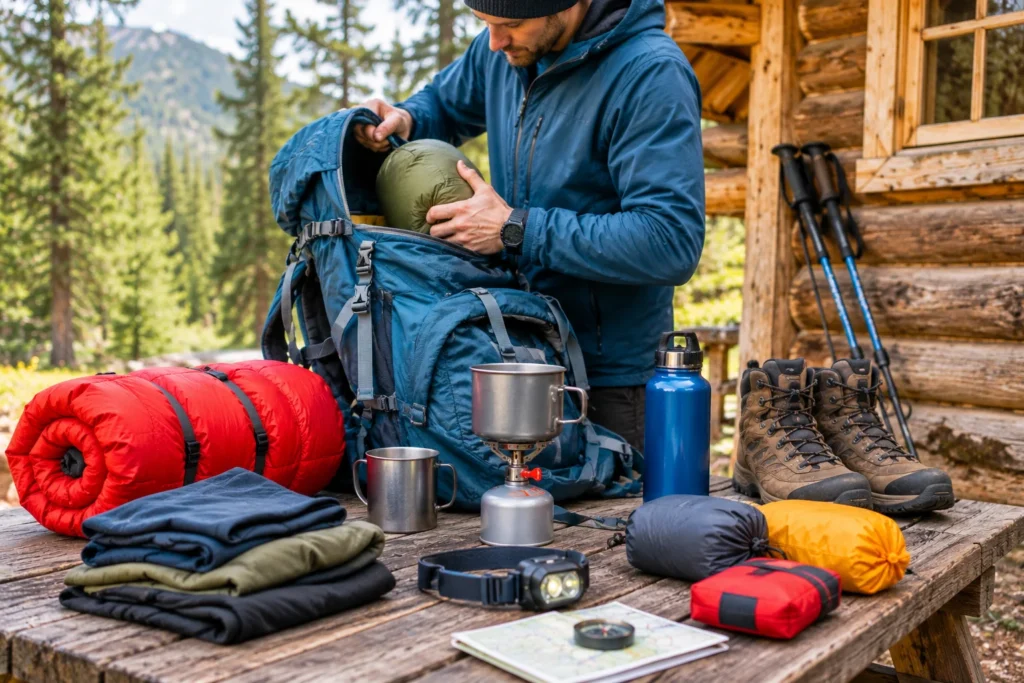
Every choice here is one of several trade-offs: more weight usually buys durability, while less asks for more care. On the trail I keep a water bottle within reach, and a bottle with a 28mm opening and an HDPE body is one common format. A bladder is the alternative, though I prefer bottles because I can see how much is left.
Beyond the big items sits a layer of small ones. A repair kit with tape, thread, needle and patches adds little, and an emergency shelter plus spare batteries fill out the safety side of the backpacking checklist. I keep a stove in this group too, since cooking gear is part of the base load, with insect repellent nearby for buggy evenings.
Comfort extras stay optional: a camp chair, a cut-down foam pad for sitting and a daypack for side trips. A merino top doubles as a sleep layer, which is why it often replaces a separate sleepwear item.
Cooking, Food and Bear-Safe Storage
Cooking and food storage on a backpacking trip come down to a heat source, cookware, enough meals and a bear-safe place to keep everything with a scent.
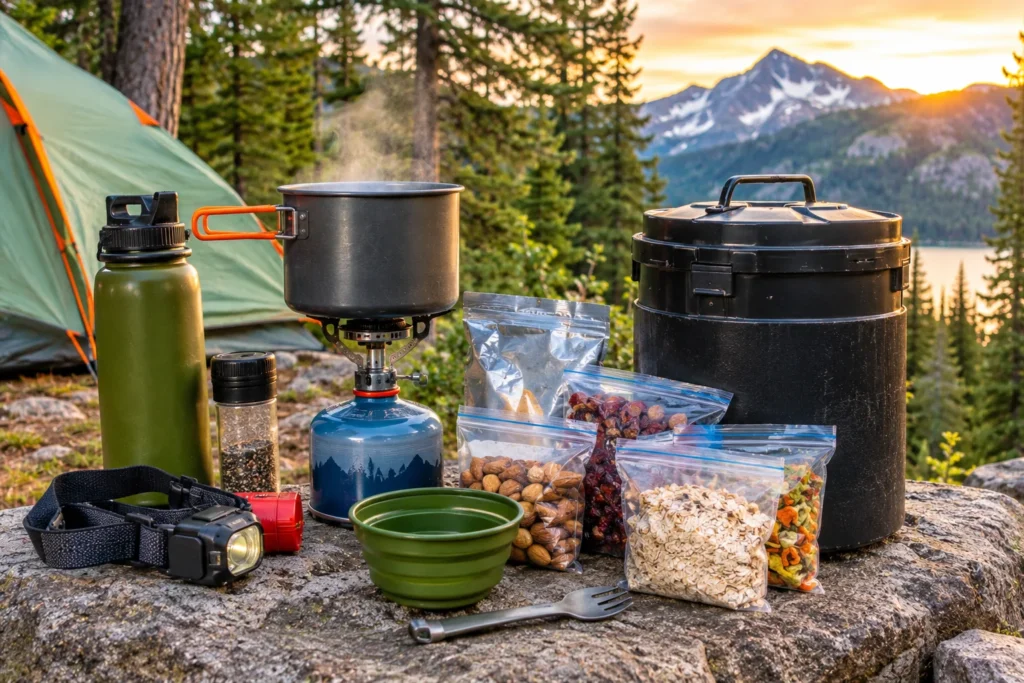
Trip length sets the quantity, and a self-supported route raises it, since nobody can resupply the meals. Bring at least two fire-starting methods, and keep a fire starter plus a small knife in the kitchen bag. Meals that only need boiling water keep the setup light, and bars and chews cover the daytime gaps.
Hard-sided containers matter where regulations require them. One option is made of carbon fiber, holds 500 cubic inches and fits about 5 days of food. Bags are not allowed in those areas, so the rule about the area decides the choice, and I never store food inside the tent.
Cold mornings change how I cook: a puffy jacket and a beanie make breakfast prep bearable. Hand sanitizer does not kill food-poisoning bacteria, so washing with biodegradable soap and a dish scrubber still counts. A gravity filter that handles 2 liters in a few minutes shortens camp chores, and hip belt pockets keep bars within reach while walking.
How Do You Set Up Water on the Trail?
Water on the trail is handled in three moves: carry enough, treat what is collected, and match the plan to the route.
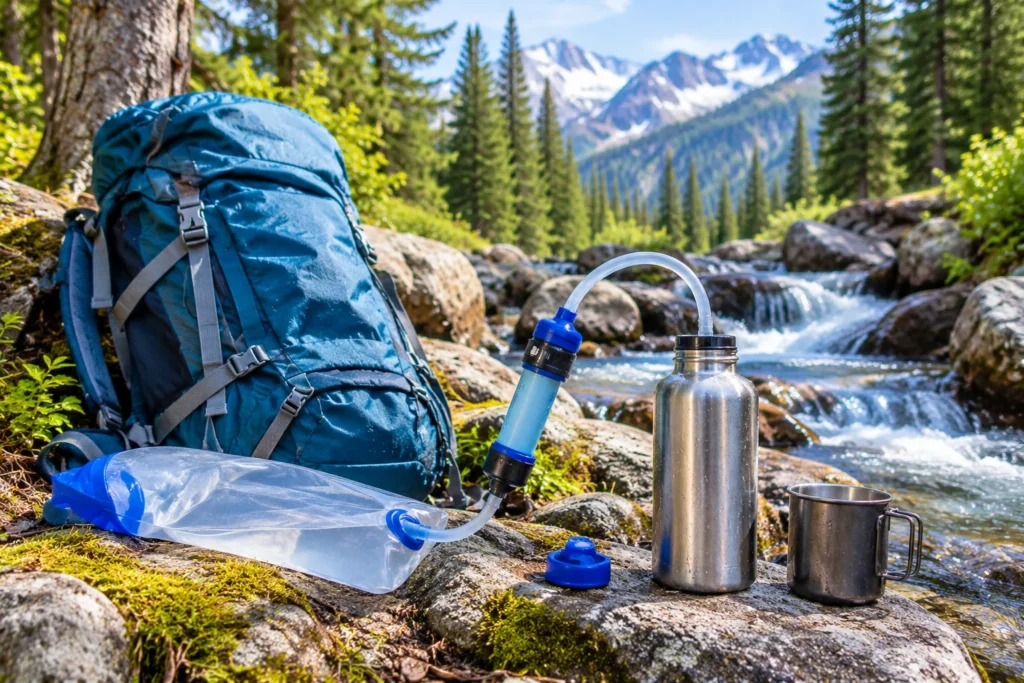
A map with a GPS backup shows where water is likely, and conditions such as heat and distance decide how much to carry between sources. On a long backpacking checklist, that planning line matters more than any gadget. Water is the heaviest thing most people carry, so the estimate deserves care.
Meals add to the water budget. Freeze-dried meals and other dehydrated food need boiling water, so a pot and an allowance for electrolytes belong in the same calculation. I treat the pot as part of the water system rather than the kitchen.
A waterproof pack liner with a side valve for compressing gear keeps contents dry, which matters at crossings. Rain pants and hiking boots are what I think about before a wet ford. A trowel and a waste bag also connect to water: digging well away from it protects the source.
Clothing and Footwear for the Trail
Clothing and footwear for the trail work best as layers that match the route, built from wool or quick-dry fabrics rather than materials that hold water.
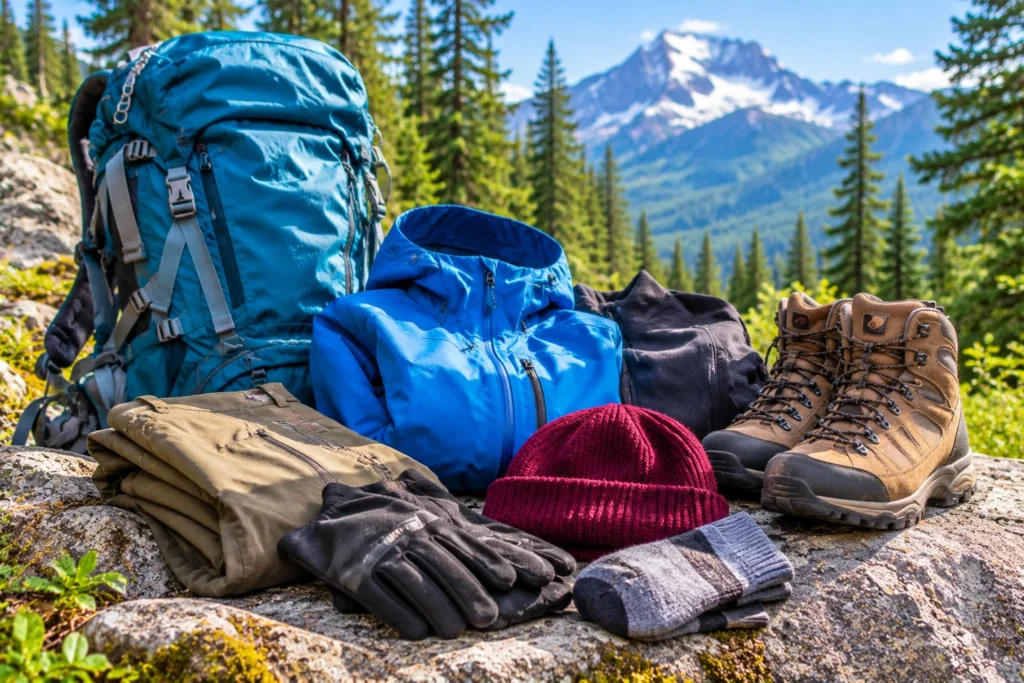
A comfortable fit in the shoes matters more to me than the season printed on the box. A rain jacket goes on every trip, and trail difficulty only changes what sits under it. Gear that is familiar from earlier outings is gear I trust at the end of a long day.
At night, the sleeping bag and the R-value of the pad decide warmth: one 15 oz pad has an R-value of 6.9 while a thicker 17 oz model reaches 4.8, so the numbers vary a lot. Sleeping in the next day’s underwear is one trick for starting the morning in dry clothes.
Sun gear is small but easy to forget. Sunscreen with SPF and lip balm with SPF belong on every backpacking checklist, along with a hat and sunglasses. Moleskin goes in the same pocket as the lip balm, ready for the first hot spot on a foot.
Navigation and Safety Items Worth Carrying
Safety on a backpacking trip rests on the ten essentials: navigation, sun protection, insulation, illumination, first aid, fire, repair tools, nutrition, hydration and emergency cover.
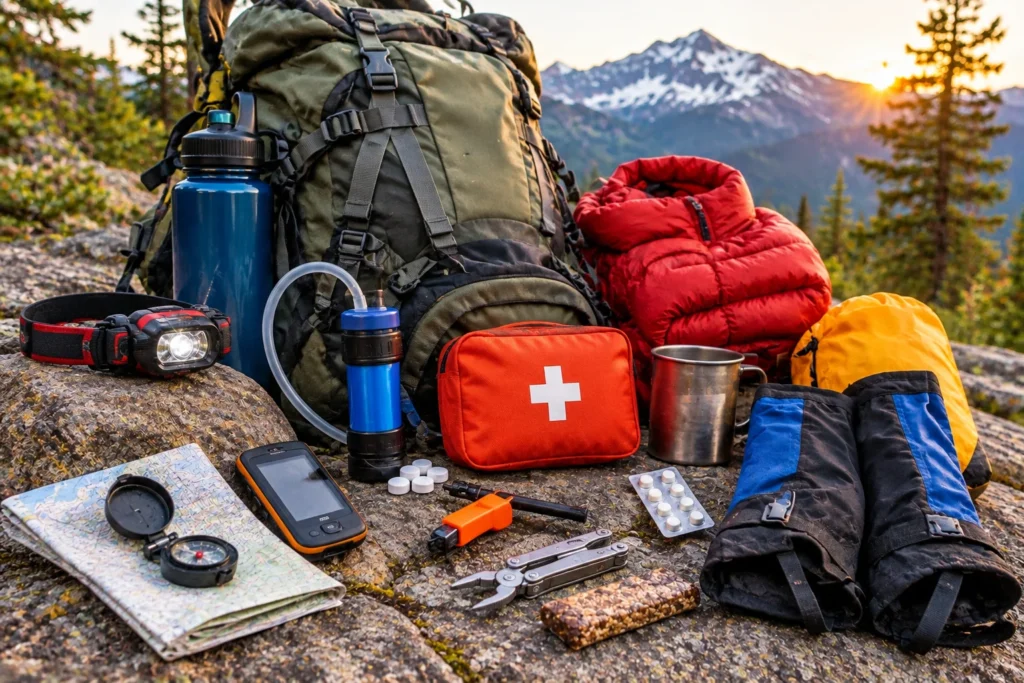
On a thru-hike the same ten categories apply, only scaled up, and I always carry an extra day of food because food for every day plus one extra is the standard buffer. A food bag tied to a tree at least 100 feet from camp stays away from sleeping areas. Prescription medications belong in the kit before anything optional.
| Need | Gear that covers it | Detail worth knowing |
|---|---|---|
| Darkness | Headlamp | A red light setting preserves night vision; 400 lumens is available in a rechargeable model |
| Drinking water | Filter, purification tablets or drops | Backup treatment is a safety item, not a luxury |
| Cold camp nights | Down jacket | A 900-fill jacket weighs 9.5 oz |
| Snow or sand | Gaiters | Keep debris out of footwear |
Treatment backups are the part people skip, and I do not. Gear lists work best when each need has two answers, one primary and one backup.
Toiletries and First Aid on a Backpacking Trip
Toiletries and first aid on a backpacking trip stay minimal: repackaged essentials, a trimmed medical kit and a way to keep scented items away from animals.
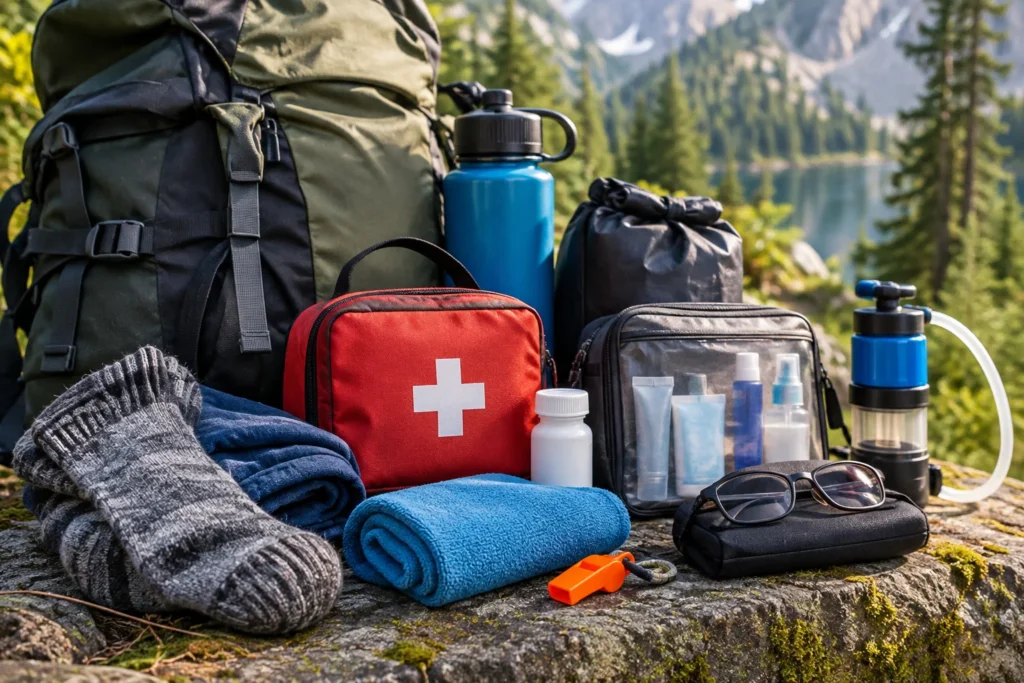
Scented items belong in the bear canister or bear bag overnight, and an odor-proof trash bag keeps waste from advertising itself. Minimal toiletries in mini containers and powdered soap reduce the load. I think of this section as subtraction rather than addition.
A first aid kit can be trimmed from a one-pound version after a Wilderness First Aid class, and a whistle earns its place at almost no cost. The point is to carry what the training actually uses, not a generic bag of supplies.
Foot and body care finish the group. Wool socks and moisture-wicking underwear dry faster, a quick-dry towel handles the rest, and I backflush the treatment system at camp so flow stays steady. Eye care items and spare glasses stay in one small pouch.
Seating, Electronics, Extras and Documents
Seating, electronics, extras and documents on a backpacking checklist are the optional comfort and paperwork items added after the essentials are covered.
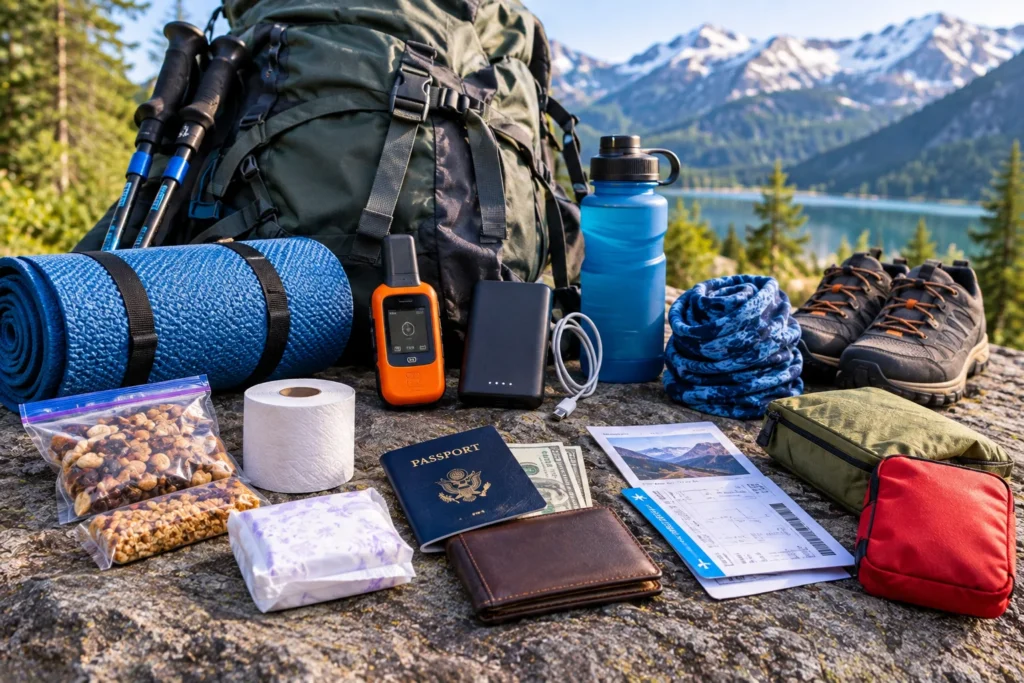
A satellite communicator offers two-way messaging and SOS, and it requires a service plan, so the plan is part of the decision. A power bank with a USB-C cable keeps the phone, set to airplane mode, and the light source running. I count these as the electronics that earn their place.
Overpacking is the common instinct, and a single multi-use item is how I fight it. A sleeping pad and a pair of trekking poles are core for me, while a collapsible canteen, a buff and camp shoes sit in the optional group. For flights, check airline rules about fuel before leaving, and keep snacks in a day bag. Toilet paper and menstrual products go in the hygiene pouch.
Documents are the last group, and each one is small:
- Passport: needed only for trips that cross a border.
- Driver’s license: the ID that stays with the wallet.
- Cash: a small amount for park fees, parking or a ride.
- Printed reservations: tickets, passes and campsite confirmations on paper.