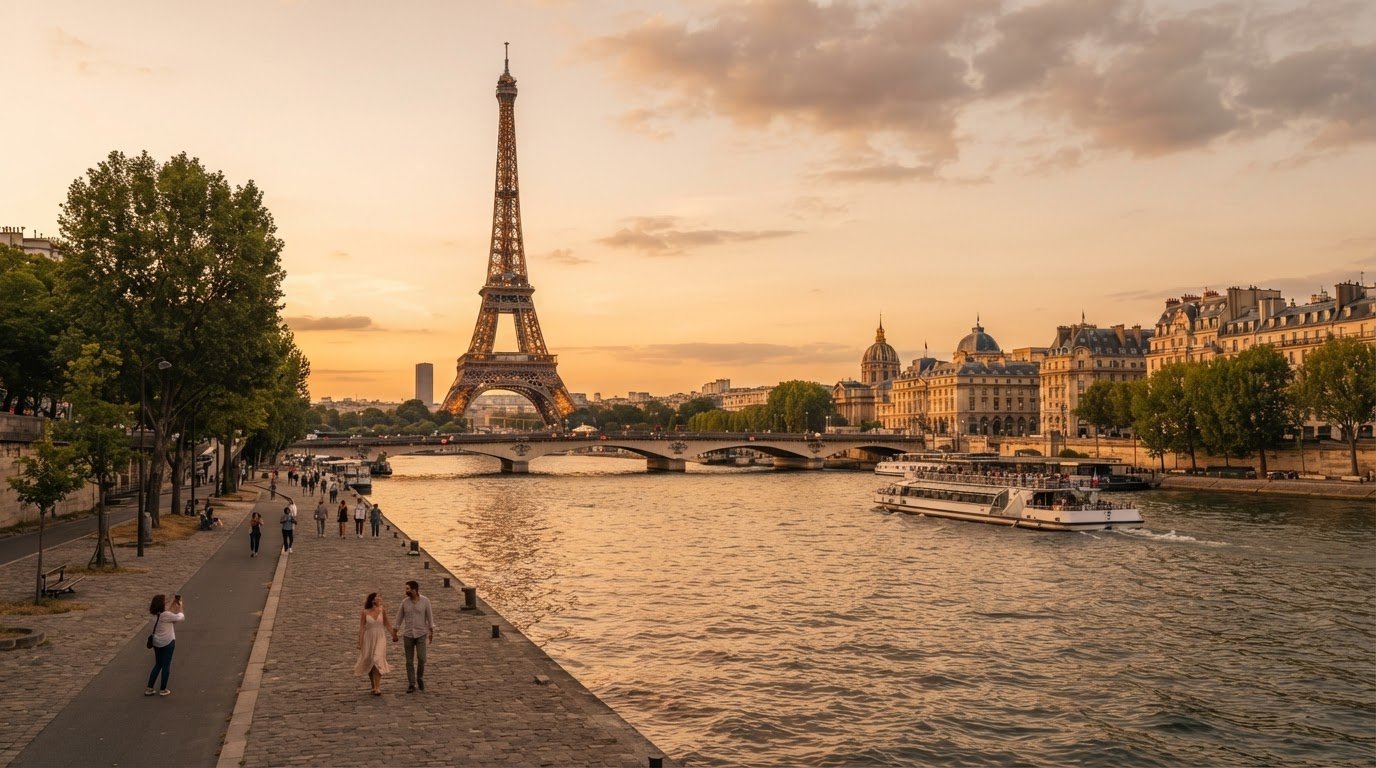
Five days in Paris is enough to cover the major landmarks, the big museums, the central islands, Montmartre and a one day trip, provided you group sights by neighborhood and book key tickets ahead.
A workable order looks like this:
Day 1: Eiffel Tower area and a Seine boat ride.
Day 2: The Tuileries, the Louvre and the Musée d’Orsay.
Day 3: Montmartre and the Opéra district.
Day 4: A day trip to Versailles.
Day 5: Le Marais, the Latin Quarter and an evening view over the city.
In my experience, the trip works best when the headline sights are spread out rather than stacked: the Mona Lisa on one afternoon, the Hall of Mirrors on another day, and the Eiffel Tower after dark, when it sparkles. Paris is divided into 20 arrondissements, so grouping stops by district saves hours of transit.
The palace at Versailles began as a hunting lodge for King Louis XIII, was expanded by the Sun King, and became the official royal residence in 1682, with more than 2000 rooms. The Treaty of Versailles was signed in that same gallery, which is one reason the day trip earns its place.
The rest of the mix stays varied: Impressionist paintings for art lovers, the ossuaries of the Paris Catacombs for a darker afternoon, and an evening at the Moulin Rouge, a cabaret whose show has run since the late 1800s.
Best Time to Visit Paris for 5 Days in Paris Trips
The best time to visit Paris is May-June or September, the months on either side of the peak summer stretch, when temperatures are comfortable.
Paris is second only to London among the most-visited cities in Europe, so first-time visitors gain a lot by avoiding midsummer. In my experience, spring evenings suit open lawns such as the Champ de Mars and the Jardin du Luxembourg. Spring also suits Versailles, where the gardens bloom: the Grand Canal stretches out ahead of the palace, while the Petit Trianon and the Queen’s Hamlet, embraced by Marie Antoinette, sit in quieter corners. Midsummer brings the heaviest international traffic and the highest heat, while many Europeans take their own vacations then.
Rain does not ruin a Paris day. The Marché des Enfants Rouges, the oldest covered market in Paris, handles a wet morning, and at the Musée de l’Orangerie Monet’s Water Lilies wrap around the two oval galleries he designed. The Paris Catacombs also work as an indoor option in colder months, though they are dark and damp.
How Do You Get Around Paris?
The easiest way to get around Paris is the Metro, which costs a flat €2.50 per journey and reaches almost every major sight.
| Option | Best for | What to know |
| Metro | Most sightseeing days | €2.50 per journey; buy tickets in the Bonjour RATP app |
| Bus | Short scenic hops | €2 per ticket, also bought in the app |
| Taxi | Late nights and heavy bags | Rides from the airport have set prices |
| Walking | Sights in one district | Distances inside a cluster are short |
Paris is only 350 kilometers from London, so the Eurostar is a real option, though direct flights from most of Europe and the United States are also common. Gare de Lyon is worth knowing even if you never ride a train from it, because Le Train Bleu, the opulent restaurant built in 1901, sits inside.
I use stations as landmarks: Charles de Gaulle-Étoile for the Arc de Triomphe, Anvers for Montmartre (a funicular can carry you up to the basilica), Philippe-Auguste for the main cemetery entrance on Boulevard de Miniloan, and Denfert-Rochereau for the Catacombs.
For Versailles, the RER C stops at Château Versailles Rive Gauche, the closest station to the gates, and SNCF Lines L and N also get you close. Arriving on a morning flight? Ask about early check-in; the Moxy Hotel Bastille sits beside several Metro stops. Finally, protests can occur in busy city centers, so check the news before choosing a route.
Where Should You Stay in Paris?
The most popular places for visitors to stay in Paris are the central 1st, 4th, 5th and 6th districts, ideally within walking distance of a Metro station.
Before booking, I skim two or three guidebooks, such as DK Eyewitness and Michelin Guidebooks, to match neighborhoods to my interests. The Right Bank puts you near the Louvre and the Opéra, the 7th arrondissement offers hotels with Eiffel Tower views, and the 18th arrondissement covers Montmartre.
Check the details that change a stay. Not every room has air conditioning, which matters in the hottest weeks, and the average room is small, so book early for high season. For a splurge, the Ritz is where Coco Chanel lived.
Pack for French power: 230 V and Type C and F plugs. One traveler fried a flatiron within minutes of arriving, so I leave heated tools at home, and if my room is not ready I leave my luggage at the front desk.
Eiffel Tower and Seine Cruise Without the Stress
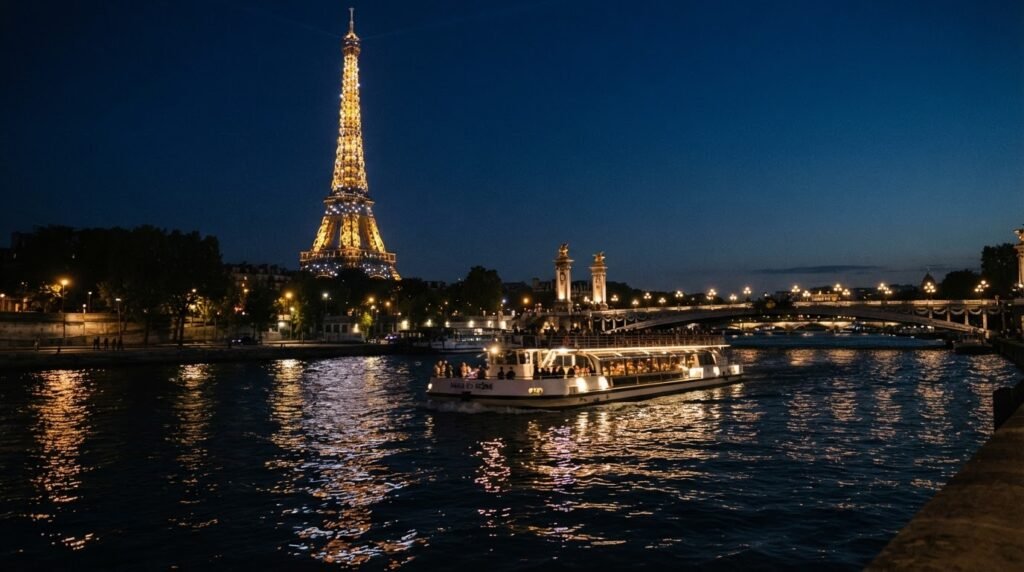
The Eiffel Tower is worth seeing after dark, when it is illuminated for 5 minutes at the top of every hour, and a one-hour Seine boat ride before dinner pairs naturally with it.
In my experience, the City of Light earns its nickname on the water. The riverbanks feel romantic, and the main sightseeing boats leave from the Left Bank, right in front of the tower, so an evening afloat takes little effort and can become one of those lifelong memories.
The area around the tower is always busy, and petty theft such as pickpocketing is common there. I carry valuables in a crossbody bag, never a back pocket, and I ignore anyone asking me to sign a petition, a known distraction tactic. Whether to go up is personal: even with an advance ticket you still queue for the lift.
For dinner, Bambini sits close to the tower and offers outdoor tables with a view in warmer months, and many restaurants take bookings through the TheFork app, which sometimes unlocks discounts.
Museums Worth Your Time: Louvre, Orsay and Orangerie
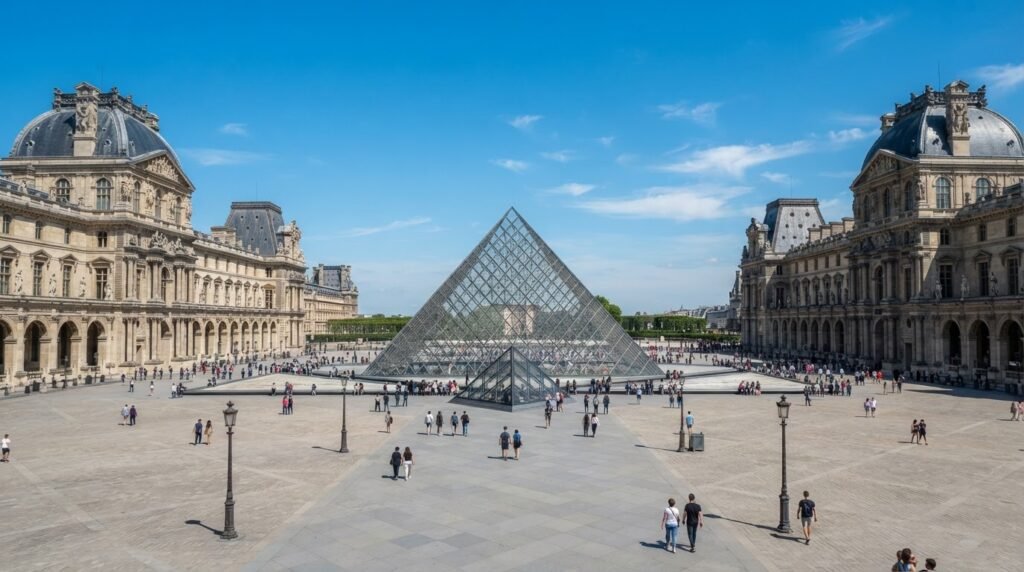
The Louvre, the Musée d’Orsay and the small Musée de l’Orangerie are the three Paris museums I would choose first, because each fits a manageable block of time.
The Louvre is the largest art museum in the world, with more than 500,000 pieces in its collection, so I join a small-group guided tour of 15 people at most near closing time. The Musée d’Orsay is easier to manage and holds work by Monet, Manet, Degas, Cezanne and Van Gogh, while the Orangerie needs about an hour.
Walking between them can be a highlight in itself. Follow the Bouquinistes, the riverside book sellers whose tradition is protected by UNESCO, then continue through the Tuileries toward Place de la Concorde and the Champs-Élysées, an avenue about 1.9 kilometers long. Designer shops line the Rue Saint-Honoré beside the gardens.
For lunch near Orsay, Les Deux Magots and Café de Flore face each other in Saint-Germain, and writers such as Hemingway are linked with both. In winter I would add the Cluny museum, a forum favorite, and La Galerie Dior, where a walk through showrooms of couture takes about an hour.
Notre-Dame Cathedral and Its Island Neighbors
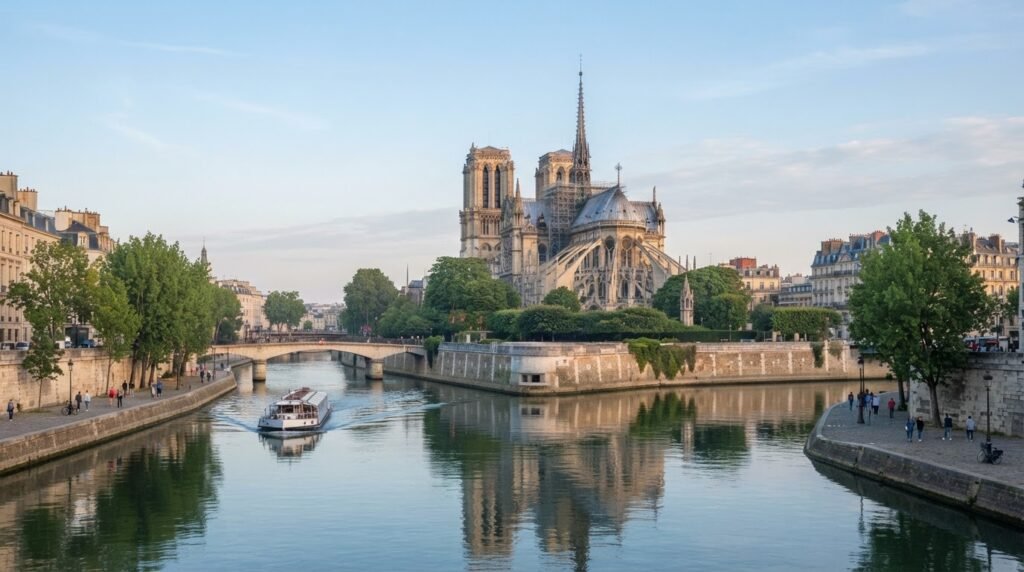
Notre-Dame Cathedral is open to visitors again after its restoration, and entry is free, so the main task is beating the line.
Arriving before 10 a.m. keeps the wait short in my experience. Next door on the island, Sainte-Chapelle was built in 1248 for King Louis IX to hold the Crown of Thorns, and its 50-foot windows are the reason to go. The chapel sits inside a former royal palace that now houses the Palais de Justice, and forum travelers recommend pairing both churches with the Conciergerie, since all three are close together.
A café stop helps: Aux Tours de Notre Dame, right beside the cathedral, was reported as a pleasant place that did not break the bank, and Le Saint-Regis serves brunch on the quiet island across the bridge.
Across the river, Shakespeare and Company, open since 1951, anchors the book-lover’s Latin Quarter near the Sorbonne. For a base here, Hotel Providence, a four-star hotel, sits near both the Louvre and Notre-Dame.
Sainte-Chapelle: Booking, Timing and What to Pair It With
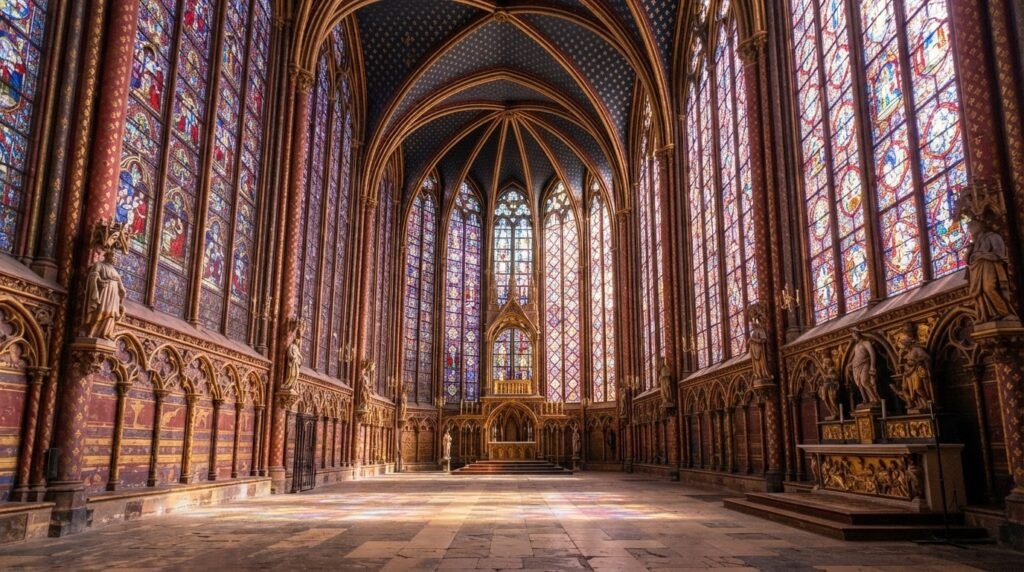
Sainte-Chapelle should be booked in advance, because morning lines can get long, and about half an hour is enough inside.
The relic the chapel was designed to hold is now a 10-minute walk away: the axial chapel of Notre-Dame displays it most Fridays from 3 to 6:30 p.m., so I would check that window before fixing the day. Notre-Dame itself reopened in December 2024 after the 2019 fire, and timed entry reservations help from April through October, though sources differ on how far ahead slots open, from a few hours to two or three days.
Cold-weather visitors may catch the Christmas markets, which usually run into early January. If you buy a Paris Museum Pass, remember it covers Versailles and the Louvre among others but must be used on consecutive days, which shapes when a day trip fits.
Across the Seine, the Pantheon holds Marie Curie and Victor Hugo, and Rue Mouffetard, Paris’s oldest market street, is a short wander away in the 5th district.
Montmartre and Sacré-Cœur: A Morning Plan
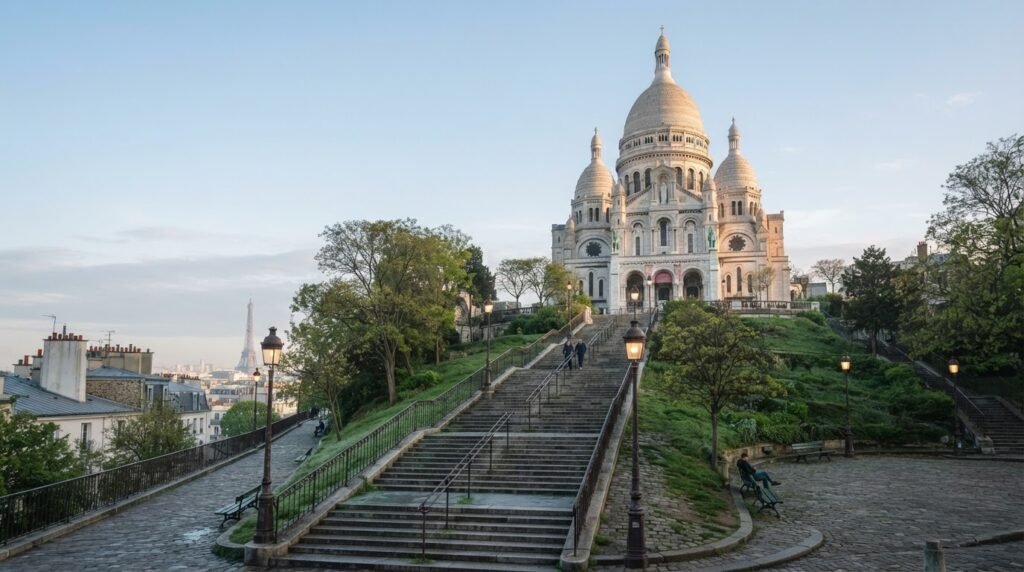
Montmartre is best explored on foot in the morning, when the streets around Sacré-Cœur are quieter than the evening gathering on the basilica steps.
In my experience an early start pays off. If the hill feels steep, take an Uber or cab for the 15-minute ride to the basilica and stroll downhill. Entry to the basilica is free, and the view from the front is wide, especially at sunset. For dinner, Le Consulat is a favorite of painters such as Van Gogh, Le Chalet Savoyard is known for cheese fondue, and Pink Mamma is popular for its ambiance and food.
Heading south into the 9th district, the Palais Garnier, designed by architect Charles Garnier, has a 1,979-seat auditorium, the gold-coated Grand Foyer, and a box said to belong to the Phantom of the Opera. Close by, Galeries Lafayette has an art nouveau dome and a Friday fashion show at 3 p.m.
If you like climbing, compare the basilica dome with the 284 steps of the Arc de Triomphe. To sleep near this route, Hotel Fabric, a three-star boutique hotel, has easy access to Montmartre Hill and Galeries Lafayette.
Opéra Garnier, Galeries Lafayette and Dior: A Fashion-Minded Day
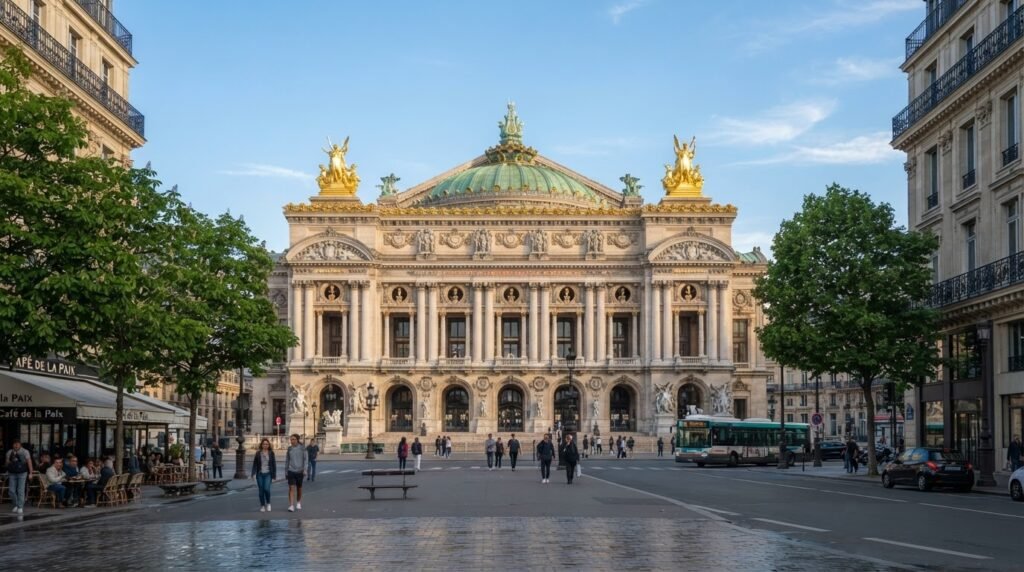
A fashion-minded Paris day links the Palais Garnier, Galeries Lafayette and a couture exhibition, with the first two only a few minutes’ walk apart.
The Palais Garnier was built in the late 1800s at the request of Emperor Napoleon III, and I highly recommend upgrading to the audioguide once inside. At the Louvre I also enjoyed the Napoleon III Apartments, a reminder of the same era’s grandeur.
On a morning route from Montmartre, wander past the artists of the Place du Tertre and the pink walls of La Maison Rose, a filming spot for Emily in Paris. The neighborhood once sheltered painters such as Toulouse-Lautrec and Picasso.
Back in the center, a terrace at Café Marly overlooks the Louvre courtyard, though opinions on value differ, and the Laduree counter inside Galeries Lafayette sells macarons. On a Dior day, pair the exhibition with a Bateaux-Mouches boat, a 1-hour cruise that passes the Louvre and Musée d’Orsay.
Shopping tip: American Express is not widely accepted, though chains such as H&M and Starbucks take it, and foreign transaction fees on a card can add up. For a splurge stay, the Four Seasons Hotel George V sits close to the grand shopping avenue, and anyone who prefers the fashionable side should book a fashion-history walking tour.
Versailles Day Trip: Tickets, Trains and Tour Options
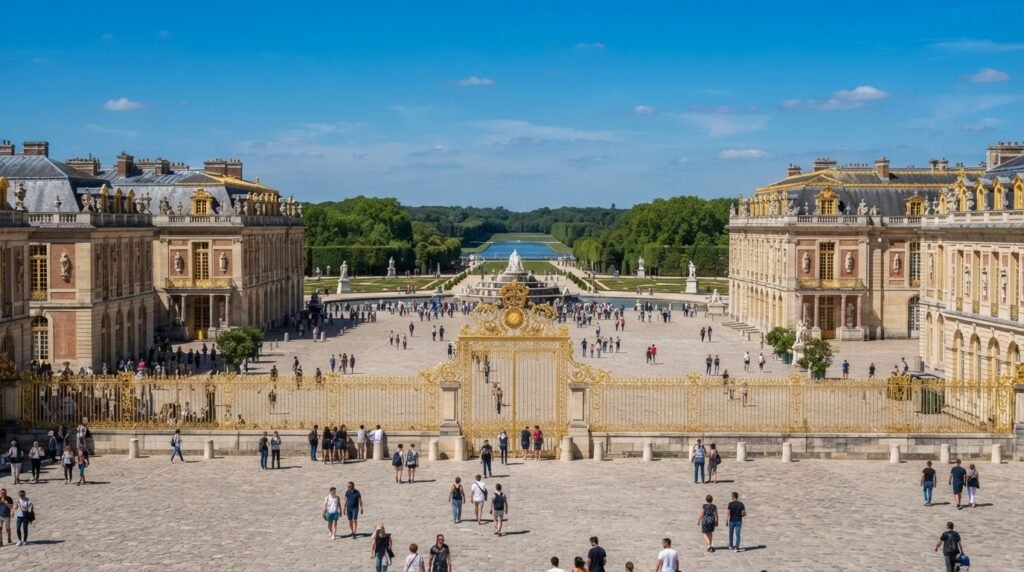
A Versailles day trip works best with a pre-booked ticket and an early start, because the palace is huge, popular, and requires every visitor to reserve an entry window.
The palace is roughly 25-30 minutes from central Paris on the RER C, while the airport line, RER B, serves a different route. Load tickets on the Bonjour RATP app or a Navigo Easy card, and navigate with Citymapper, which works offline, following the color-coded Metro lines.
I plan around July and the other busiest months, when lines swell, and consider a skip-the-line ticket. Allow for travel time: roughly a couple of hours round trip to reach the palace entrance.
Gardens deserve comparison: the Tuileries, laid out by André Le Nôtre in 1664, hold over 860 trees, while the grounds at Versailles demand comfortable shoes because the estate is huge. If you prefer a different excursion, Giverny, Monet’s home, is a popular alternative.
Latin Quarter and Le Marais: Neighborhoods Worth Wandering
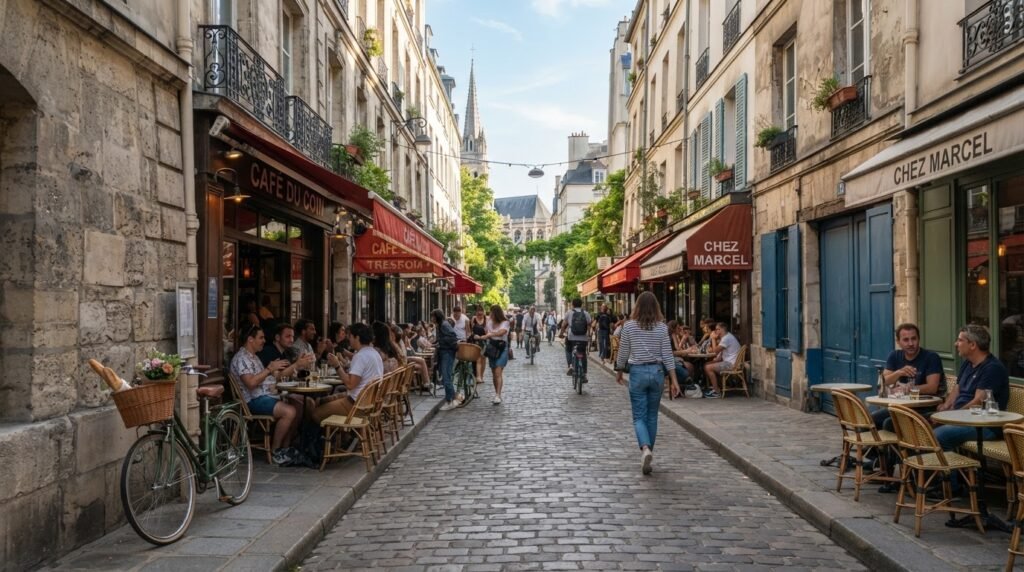
The Latin Quarter and Le Marais are easiest to explore on foot, with a market or café stop between sights.
Paris districts follow a spiral numbering pattern that starts at the center, so the historic core around Le Marais is compact. I would book a food tour here, since guides stop at pastry shops, cheese counters and wine stops. Then cross to Île Saint-Louis, a quiet island of café terraces and bistro tables, and consider Hotel La Perle, a budget hotel close to Le Marais and Place des Vosges.
South of the river, the Musée d’Orsay fills a former train station and holds work by Renoir, while the Musée Rodin shows The Thinker in a garden setting. A short Metro ride east, Père Lachaise is the resting place of Oscar Wilde and Marcel Proust. For a final dinner, Septime offers an ever-changing menu and natural wines.
Where to Eat and Drink in Paris
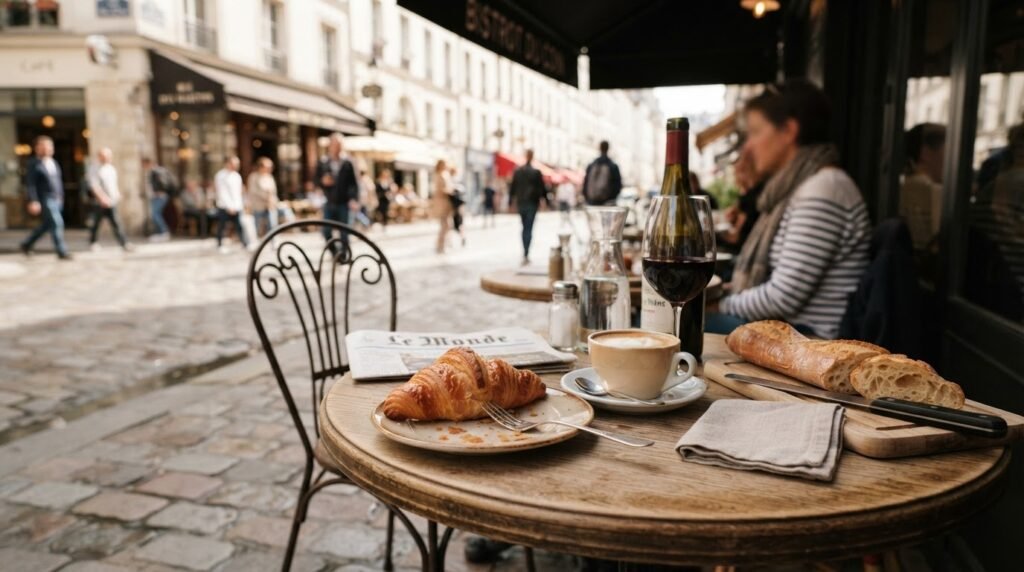
A reliable way to eat well in Paris is to book ahead, since most restaurants open for dinner only around 7 or 7:30 p.m. and popular spots fill up.
In my experience markets cover lunch: Rue Cler is known for fresh produce, and Les Puces de Saint-Ouen, the largest flea market in Europe, is worth a browse. For drinks, Harry’s New York Bar, dating to 1911, was shipped from Manhattan and is said to have invented the Bloody Mary, while Bar Vendôme, inside a grand hotel, was described by one visitor as magically calm. A Montmartre street scene can include an accordion player, and a dinner cruise lasts 2.5 hours, combining meal and sights.
Money matters: an ATM gives a better rate than an exchange desk, and about 100 Euro in cash covers smaller purchases. Say bonjour every time you enter a shop or restaurant. In August, it is not uncommon to find smaller shops closed, and some cafés shut too.
Best Views in Paris: Arc de Triomphe, Eiffel Photo Spots and Sacré-Cœur
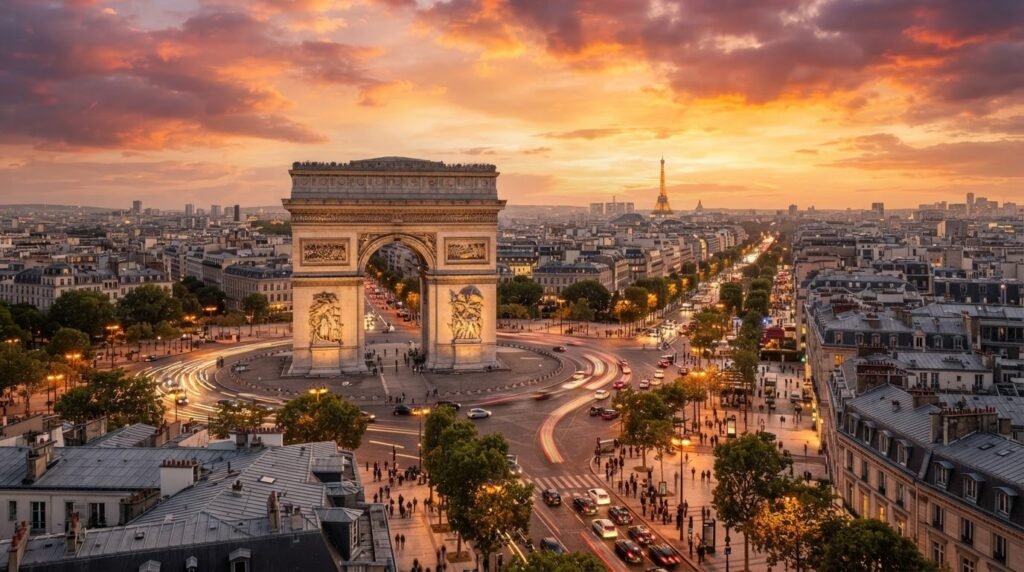
The Arc de Triomphe, the Sacré-Cœur terrace and Montparnasse Tower give wide views of Paris, and each suits a different time of day.
At the Arc de Triomphe, a combo ticket can pair the climb with a river trip on a Bateaux Parisiens boat. The classic Eiffel photo is taken from Trocadéro, then across the Pont d’Iéna; a popular angle with the tower framed by buildings is the top of the Rue de l’Université, though expect other photographers there. Views from the tower’s second level are nice, but I think other places show Paris better, because you cannot see the tower itself from up there.
Come evening, the tower stays lit until 1 a.m. and mild temperatures make a late stroll pleasant. For a bird’s-eye outlook, the basilica dome has 300 steps, which is a solid workout.
Père Lachaise Cemetery and the Paris Catacombs
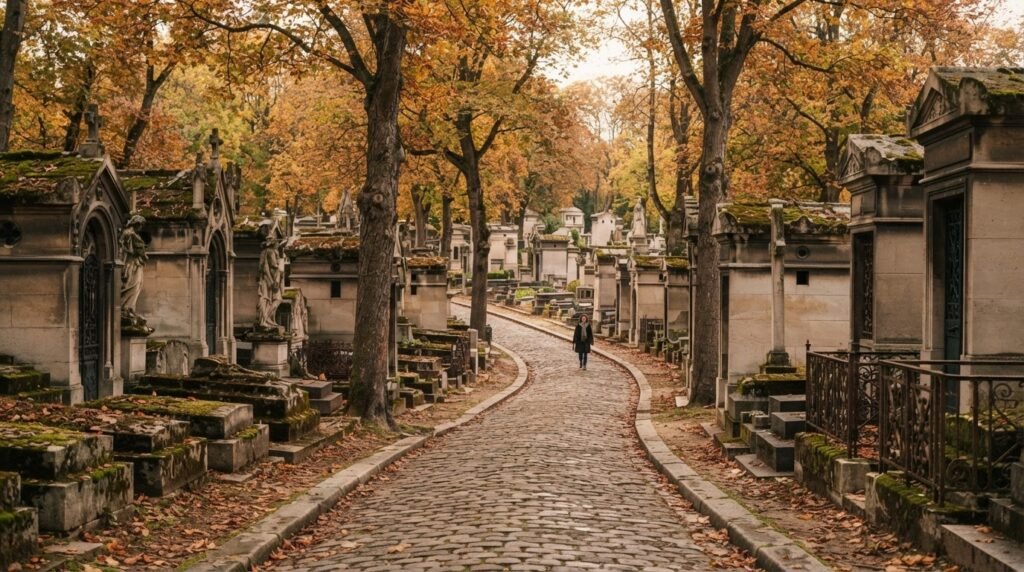
Père Lachaise Cemetery and the Paris Catacombs suit travelers who want a quieter, history-focused afternoon away from the main landmarks.
Père Lachaise lies in the 20th arrondissement and is the largest cemetery in Paris. As someone who enjoys visiting cemeteries when I travel, I treat it as a must-visit. The Catacombs are underground tunnels filled with bones; tours run at 5 p.m. on some days, or you can book a ticket with an audio guide. I would not call them a must-do, but the history is fascinating.
To close the day, I take Line 6 to Edgar Quinet and walk to Montparnasse Tower, which many locals consider an eyesore yet offers a 360-degree view from the 56th floor. It stays open until 11:30 p.m., so you can go up before sunset or after dark, and booking in advance is highly recommended.
FAQs
Is Paris Safe for Visitors?
Paris is generally safe for visitors who stay alert in crowded places and keep bags zipped and close to the body.
I felt comfortable choosing a not-too-touristy base; for solo travelers, Hôtel des Comédies in the 10th Arrondissement drew praise for being accessible and Parisian. The city can feel overwhelming, so a few rules help: keep valuables at your side and never leave cameras or phones visible.
Traffic needs respect too. At the Arc de Triomphe, do not try to cross the 8-lane roundabout; follow the signs to the pedestrian underpass. Plan around closures as well: the Louvre and several other museums are closed on Tuesdays, and the Louvre stays open until 9:45PM on Wednesdays and Fridays.
Is 5 Days in Paris Too Long?
Five days in Paris is not too long for a first visit, because it lets you see most highlights and still fit in one day trip without feeling hurried.
In my view a first visit is shaped by what you prioritize, and one forum poster recommends a hop-on hop-off bus such as the Toot Bus for an early overview. Another suggests an AI application to group sights by location and estimate walking time. Even in shoulder season you may meet long lines, so book ahead.
For the day trip, one traveler’s favorite experience was a bike tour with Boutique Bike Tours, which included the palace at opening, gardens and a lunch picnic. A longer plan can add cemeteries and the underground: Père Lachaise is the resting place of Jim Morrison, Édith Piaf and Frédéric Chopin, and the Catacombs hold the remains of more than six million people along a one-mile stretch open to visitors.
Can You Fit Normandy and Versailles Into 5 Days in Paris?
Yes, you can fit Normandy and Versailles into five days in Paris, but it leaves roughly 3 full days for the city itself, so the Paris shortlist has to be tight.
Opinions differ on how much to cram. One forum traveler stayed 7 nights with 6 full days and still skipped the day trips. I lean toward five days: it gives a comprehensive first visit without having to rush too much, while 3-4 days can still squeeze in the highlights.
A Versailles half-day needs a booked time slot, since admission within half an hour is only guaranteed with online tickets. At the Louvre, if time is short, see the Venus de Milo and Winged Victory early, before the museum fills; it displays 35,000 works out of more than 500,000.
How Much Does a Trip to Paris Cost?
A trip to Paris costs roughly $800 per person for the activities in a 5-day plan, plus at least $200 per night for a hotel and about 30-40 per person at nicer sit-down meals.
Hotel choice drives the total. With more than 1,500 hotels to choose from, ranges vary, and a slightly more luxury stay costs more than that base nightly rate. I would keep room size in mind too, since the average Paris hotel room is quite small.
Flights come first. One traveler found round trips from Washington DC for no more than $600 roundtrip on a last-minute deal, and $300 tickets from New York or Washington with more planning; check Skyscanner and Google Flights for current prices.
For the airport run, taxis charge fixed fares, 56 euros to the north side of the Seine and 65 euros to the south, and a pre-booked airport transfer costs more but is less stressful. Either way, expect 35-60 minutes to reach downtown, depending on traffic.