
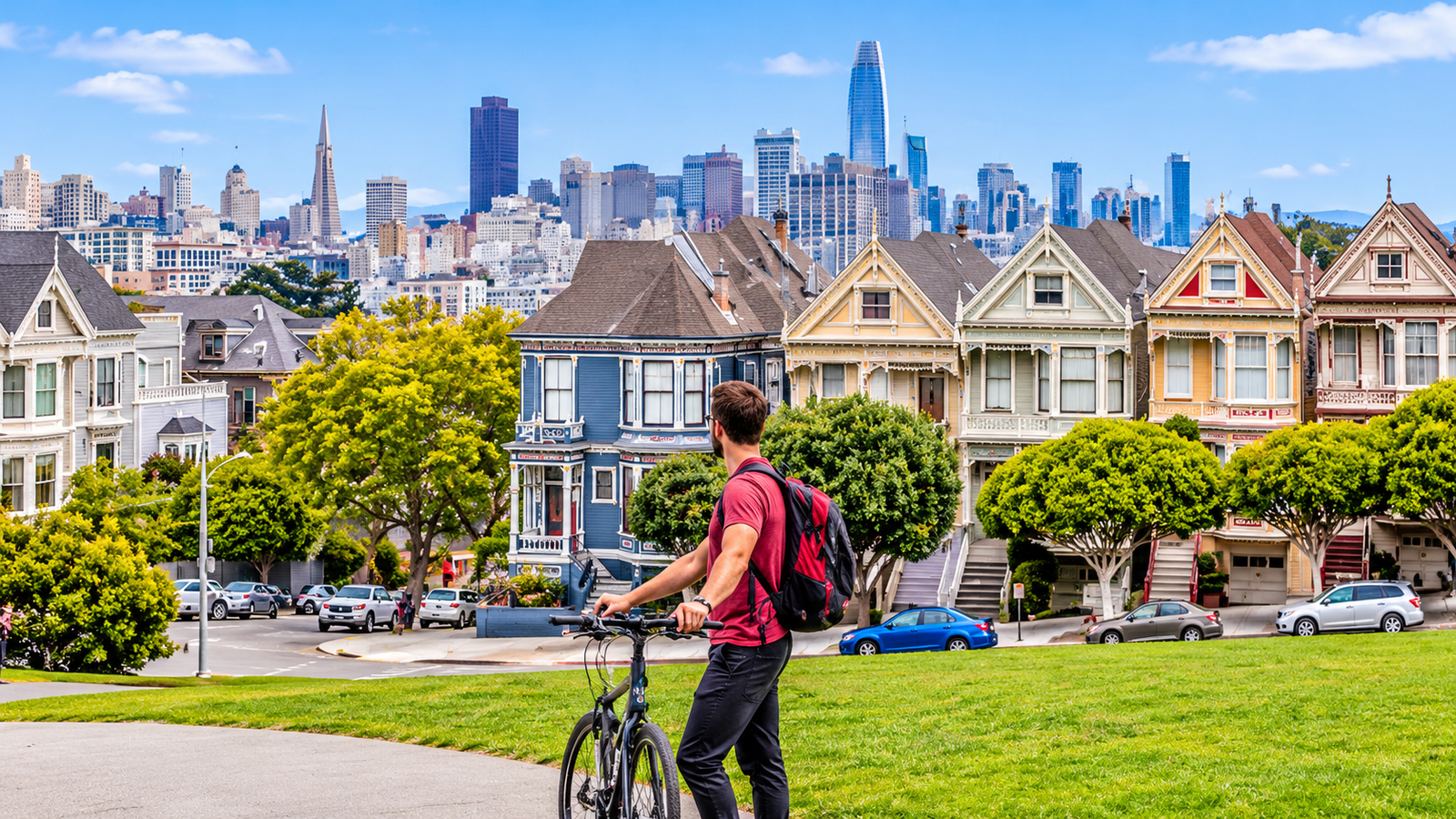
Solo travel in San Francisco is a good idea for most visitors, provided you plan your transport and choose your neighborhood with some care.
Stories about crime and the sight of unhoused people on certain blocks put plenty of first-timers off, yet that reputation turns out to be overblown for travelers who stick to sensible habits. A solo visit stays manageable when you treat the city like any large destination: use ordinary caution, schedule busier errands for the morning and read up before you land.
Good planning matters more than bravery here. The waterfront, with its Bay Bridge skyline, historic districts and food markets, sits in a compact area, so you can leave room to wander between bookings instead of rushing from one ticket to the next. Several day trips also depart from the city itself, which means a single base covers a lot of ground.
Solo Travel San Francisco Safety Tips
San Francisco is safe enough for most solo travelers who apply basic awareness, and the main thing to plan around is protecting your belongings rather than avoiding the city.
Travelers who judge the city by headlines alone often arrive more nervous than they need to be. Firsthand accounts from independent visitors describe a place that changes character from block to block, so the street you are on matters more than the city’s overall reputation. A cheap room can easily place you in a less desirable part of town, which is why location should outrank price when you book.
Any safety concern about a specific street is reason enough to pick another route. Chinatown is described as friendly and safe to explore alone, and a hostel with its own garage can settle worries about a car. Once it gets dark, a Lyft or Uber is a sensible alternative to a long walk through unfamiliar blocks.
Three habits cover most of the risk:
- Leave parked cars completely empty, since thefts from vehicles are not uncommon around downtown.
- Keep phones and bags out of view when you sit down to eat.
- Take an app ride instead of walking when a route feels unfamiliar.
Where a Solo Traveler Should Stay in San Francisco
A solo traveler should choose an area first and search for lodging inside it, because location shapes safety and walking distance more than the nightly rate does.
Neighborhood choice also decides how much you will depend on a car. A room with a secure parking garage removes the worry about leaving luggage and a vehicle on the street, which matters in a city where parking is atrocious and costly. Central hotels run pricier than lodging in quieter districts, so many solo guests trade a little convenience for savings.
Cheap deals have limits. A booking that sits farther away from the sights can cost you time every day, and the Tenderloin, while described as less bad by day than its reputation suggests, is not a place to wander alone after dark. If you can go car-free, the decision gets simpler, and even a spot near the Crookedest Street works well when transit is close.
Small habits protect the trip: carry your laptop with you after checkout, lock valuables in the room safe and take basic precautions in the garage. For dinner, a nearby pub plate of Bangers and Mash or a steakhouse cup of clam chowder keeps the evening short and simple.
How to Get Around San Francisco Without Stress
Getting around San Francisco is easiest with public transit and ride-sharing, because driving and parking are time-consuming and stressful for visitors.
Parking costs add up quickly: reported hotel rates run 60-80 per night on top of the room price. Break-ins are a known risk as well, so a sound parking strategy means using a garage and leaving nothing showing inside the car. Even then, spaces can be scarce. One visitor arriving early for a timed Ansel Adams exhibit found the main garage full, with a line of vehicles half a mile long, while a spot a block from Cinderella Bakery was easy to find.
Public transit works well in the daytime, and lodging with strong transit access keeps costs down. After night falls, rideshares are the safer pick. Weather matters too, since the city can feel freezing even when the sun is out, so pack layers.
| Option | Main upside | Main downside |
| Driving | Total control over timing | Costly parking and theft risk |
| Public transit | Cost efficient, clean buses | Routes can confuse first-timers |
| Rideshare | Direct door-to-door trips | Higher fares than a day pass |
Best Waterfront Things to Do Alone
The Embarcadero waterfront is the easiest place to start alone, because the Ferry Building, Ghirardelli Square and the nearby piers put food, views and transport within a few blocks.
The Ferry Building works as both a commuter terminal and a gourmet market, which makes it ideal for people-watching with a coffee. Nearby, Boudin serves a hearty soup in a sourdough bread bowl on a second-floor patio overlooking the bay. Riding one of the cable cars solo means you can study the street scenes instead of keeping up a conversation.
A ferry to Sausalito takes about 30 minutes, and park rangers on the bay’s islands will answer questions if you want company. Angel Island rewards a longer trip: its perimeter measures about 5 miles, its tallest point reaches 788 feet, and detainees’ wall poems from the Chinese Exclusion Act era are still visible. Because no one lives on the island, many visitors find it quiet and safe.
Best Landmarks and Gardens for Solo Visitors
The best landmarks for solo visitors are the ones that reward lingering, such as the Presidio, Lombard Street and the Japanese Tea Garden, because each lets you move at your own pace.
The Presidio, a former fort in the city’s northwest corner, offers old army batteries and quiet trails, while Lombard Street can be admired from its stairways, where the view differs on each side. Even a heavily touristed stop such as Pier 39 works alone: watch the sea lions crowd onto K-Dock, which is free to visit, ask questions at the Sea Lion Center, and read the names on the Locks of Love fence.
Art and nature fit together in Golden Gate Park. The Legion of Honor keeps Rodin’s The Thinker at its entrance, and the de Young adds an observation tower with panoramic views, included in a museum ticket. At the Japanese Tea Garden, the koi ponds are a highlight, and cherry blossom season arrives in March or April. Entry is free on Mondays, Wednesdays, and Fridays from 9am to 10am. Pack a picnic for a park lawn and let the afternoon stretch out.
Museums and Cultural Spots for Solo Visitors
Museums and cultural landmarks suit solo visitors well, because self-guided formats such as an audio tour let you set the pace and many options are free or low-cost.
The Palace of Fine Arts, built for the 1915 Panama-Pacific Exposition, has a grand rotunda, colonnades and a lagoon, and entry to the site costs nothing. Morning or late afternoon gives the best light for photos. Japan town is the oldest and largest of the three remaining Japan towns in the United States, spanning six city blocks, with the Peace Pagoda at the center of Peace Plaza.
Crowds change the plan. A weekend visit to Golden Gate Park’s museums can mean long garage lines, but a North Garage entrance at Tenth and Fulton St. leads straight into the museum above. Near Union Square, a modern art museum offers further room to roam. A City PASS bundles admission to several attractions, and guides to solo activities list as many as 40 options across these vibrant neighborhoods.
Where to Eat Alone Without Feeling Awkward
Eating alone is easy in San Francisco because casual counters, markets and bar seating are common, and food-focused districts such as Cow Hollow make dinner for one feel natural.
Union Street in Cow Hollow mixes shopping with restaurants and suits an evening stroll. San Francisco is a true foodie city, so even a short walk turns up options. At the waterfront market hall, the Farmer’s Market runs on Tuesdays, Thursdays, and Saturdays, and Saturday mornings get very crowded.
Neighborhood eating has its own rhythm. The Mission District is known for burritos, while North Beach and Little Italy offer pastries, coffee and pizza. Because choosing among so many places is a lot to scout alone, food tours help narrow the field.
The Golden Gate Fortune Cookie Factory, open since 1962, shows cookies being shaped by hand, and entry is free. Popular bakeries can have lines of 100+ people, and one visitor’s parking search lasted 15 minutes. Roundups of solo activities start at 22 ideas, which shows how much there is to sample.
Neighborhoods That Reward Wandering on Your Own
Neighborhoods such as Central San Francisco, the Mission and Outer Sunset reward solo wandering, because each has a signature stop and a friendly, lively street life.
In Central San Francisco, the Painted Ladies line Steiner Street across from Alamo Square Park, and the row is best known from the opening credits of Full House. The houses are private residences, so view them from the park. Up the hill toward the bay, City Lights bookstore became famous through the Beat writers, and Coat Tower adds first-floor art from the 1930s plus a 360-degree view from the top.
The Mission rewards an empty stomach. La Taqueria is known for the Mission-style burrito, and Mission Dolores Park offers a skyline view from a grassy hill that costs nothing. Out in the Outer Sunset, Outer lands serves breakfast before a walk to Ocean Beach.
Downtown, SFMOMA displays works such as a Yayoi Kusama sculpture, and the Walt Disney Family Museum on the city’s northwest edge opens Thursday through Sunday from 10am to 5:30pm. A small group format keeps tours enjoyable when you want company without a crowd. Walking tours and history tours, including free volunteer-led options, explain what you are looking at.
Cruises and Outdoor Escapes Worth Doing Solo
Cruises and outdoor escapes are worth doing alone because their structure keeps logistics simple while leaving plenty of solitude.
Alcatraz departs by ferry from Pier 33, and a self-guided 35-minute audio tour lets you move through the cell house at your own speed. Tickets sell out quickly in busy seasons, so book online and carry water, as shade is scarce. A bay cruise under the Golden Gate Bridge adds an audio guide on your phone, and twilight sailings or a champagne brunch version suit people who want company. With staff nearby the whole time, cruises feel safe, and the volunteer guides on free city tours are vetted through the public library.
On land, Crissy Field offers flat paths for walking or cycling, and the Warming Hut serves coffee when the wind picks up. A guided bike tour across the Golden Gate Bridge adds a social option. Strawberry Hill in Golden Gate Park suits a hike and feels calmer than the waterfront, so bring a book for a bench by the lake.
FAQs
Is San Francisco Safe for Solo Female Travelers?
Yes, San Francisco is safe enough for solo female travelers who keep up situational awareness, as in any large city. Visitors who stay alert report few problems, but walking certain central districts alone late in the evening invites confrontation, so take a taxi or app ride instead. Keep belongings out of plain sight in cars and on tables. Public transit is generally safe, though empty stations are best avoided after dark. Light sleepers in busy areas can run a room fan for white noise to mask street sound. Choosing a calm base before you book is another sensible step.
What Is the Best Area to Stay in San Francisco Alone?
The best area for a solo stay is a walkable district chosen for safety first, with dining nearby and reliable transit. Pick the neighborhood before the room, because cheap lodging can sit far from the places you want to visit. A boutique hotel offers atmosphere, while a budget stay may include earplugs and a continental breakfast to keep costs down. BART links the airport with downtown and the Mission District, so a base near a station makes arrival easy. Central hotels can be expensive, and common sense says to weigh a slightly longer commute against a sizeable saving.
Can You Visit San Francisco Alone on a Budget?
Yes, a San Francisco trip is possible on a budget if you pick lodging with included parking and lean on free or inexpensive sights. One reported search found hotel rooms starting at $220 per night, while a private room with a private bathroom, balcony and mini-fridge cost about $130 per night with parking included. Getting around costs little too: a $5 day pass gives unlimited rides on the city’s public transit. Food stays affordable when you choose casual spots, and the city’s burrito style even inspired chains such as Chipotle. Free walking tours led by SF City Guides ask for a donation of $15 to 20 per person.
Is It Better to Drive or Use Public Transportation?
Public transportation is easier than driving for most solo visitors, because Muni buses and light rail avoid the parking hunt. Spend ten minutes reviewing routes in Google Maps before you go, and expect a connecting bus on some trips; one first-timer got lost sorting it out and switched to a taxi-style app ride. Day trips also work without a car, since tours to Muir Woods, Napa and Carmel pick up in the city. A double-decker open-top bus covers the main sights for visitors who prefer to stay seated while learning the layout.
Are There Guided Tours for Solo Travelers?
Yes, San Francisco has guided tours for solo travelers, from street-art walks to coastal day trips, and most let you choose how social to be. Booking a tour keeps you from feeling overwhelmed by choices and lets you meet others only if you want to. In the Mission, murals cover Balmy Alley and Clarion Alley, and guides explain the stories behind them. A ghost tour visits haunted districts marked by the Gold Rush and the 1906 Earthquake. A Hop-On Hop-Off bus with 15+ stops lets you get off and on at will. The day tour to Monterey lasts about 11 hours and covers Cannery Row, 17-Mile Drive and the Monterey Bay Aquarium, while a half-day forest trip walks among redwoods.
Is San Francisco Good for a First Solo Trip?
Yes, San Francisco suits a first solo trip because compact neighborhoods, food and self-paced attractions make self-discovery easy. Plan structured days with one booked highlight in the morning and a free afternoon. Hostels skew toward 20- and 30-somethings, yet solo guests of other ages report feeling comfortable. At Pier 39, the carousel offers a cheerful break, and the California Academy of Sciences houses the four-story Ocher Rainforest. Food anchors the trip: Arsenault Bakery is recommended for its croissants, and a Russian bakery serves Varsha, a crumbly cheesecake. Amelie Wine Bar pours over 60 wines on tap, and the Biergarten in Hayes Valley serves Currywurst.