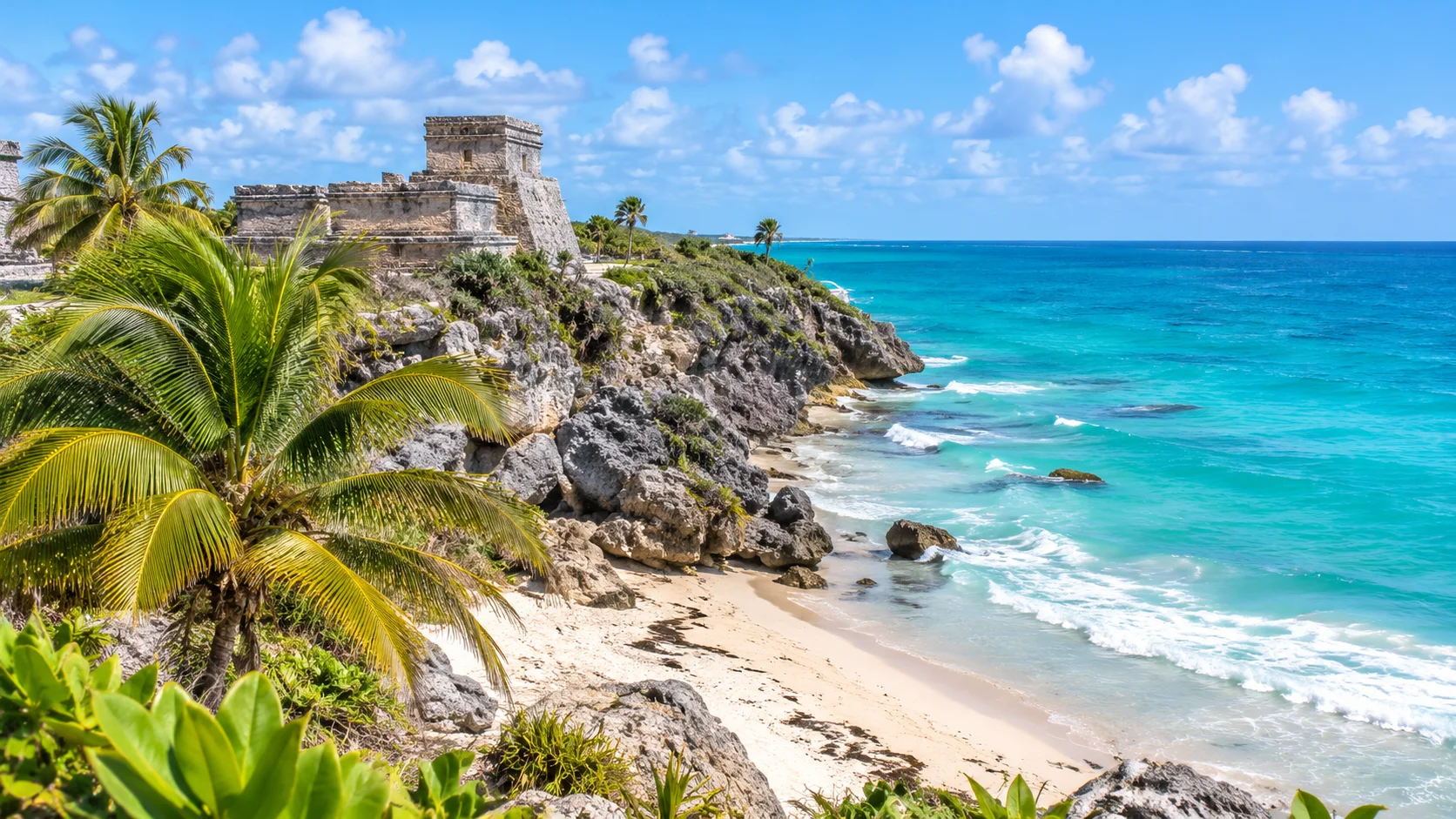
The main things to do in Tulum are visiting the ancient ruins on the Caribbean coast, swimming in freshwater sinkholes, spending a day on a public beach and taking day trips to nearby Maya sites. The ruins stand on a cliff described as 12-meter (39 ft) tall, which is why most itineraries begin there.
Water comes next. Playa Paraiso is a public beach close to the ruins, and Gran Cenote is one of the most popular sinkholes in Mexico, in a region where one local estimate counts close to 6000 of them in the jungle.
Beyond town, Coba has a pyramid that visitors can still climb, Sian Ka’an combines wildlife with ruins, and Chichen Itza works as a full-day trip. Back in town, weaving is a local specialty, and dream catchers and lamp shades turn up in shops, restaurants and hotels.
What I find helpful is mixing one active plan with one slow one, such as a beachfront yoga class followed by a swim. I have not tried that combination myself, so I can only share what is generally reported about the area.
How Do You Visit the Tulum Ruins Above the Sea
Visit the Tulum ruins early in the day, arriving on foot, by bicycle or by paid ride, because the site fills quickly and explains little on its own. Walking from town costs nothing, while taxis are the most expensive way to arrive. A bike rental usually runs on a 24-hour basis, and a padlock is worth asking for when the bike sits near the entrance.

The ruins overlook turquoise water, and a small cove, Playa Ruinas, lies directly below them. When one visitor went, the staircase was closed for reconstruction, and the cove disappears at high tide, so check access and timing before planning a swim.
Weather shapes the visit. Air temperatures average about 81 ºF from May to September and about 73 ºF in January, and the air is usually humid, so carry water. These ruins remain one of the essential things to do in Tulum, but I have not walked the site myself, so this reflects what visitors commonly report.
Tulum Beaches and Lagoons for Swimming and Quiet Time
The easiest swimming around Tulum is on public beaches and in calm lagoons, and the dry season, from November–March, gives the most dependable weather. The public beach near the ruins has clear water, some beachfront spots hire out beach beds by the day, and nearby restaurants serve ceviche.

Kaan Luum Lagoon, about 15 minutes by car from downtown, has a wooden pier over clear water, and its deep central sinkhole is off-limits to swimmers. A scooter or bicycle can get you there, while a shared van leaves a long walk in the heat.
For snorkeling away from town, travelers name Tankah Bay and Soliman Bay as good alternatives. I have not swum at these spots myself, so this is general knowledge rather than a recommendation.
Swimming and Snorkeling in Tulum’s Cenotes
Cenotes are freshwater sinkholes around Tulum where visitors swim, snorkel or dive, and the most popular open-air one, three miles from downtown, offers about 1,500 square feet of swimming surface with crystal clear water, caves and bats overhead. Swimming in one is a common item among the things to do in Tulum.

Divers can book through a dive centre, which can reach lesser-known sites, and travelers name Multum Ha for clear underwater views. Some private tours pair a quiet swim with guided meditation.
Inland, Punta Laguna, part of a nature reserve called Ma’ax Yetel Kooh, has a covered sinkhole you reach by rappelling. Tours often combine a swim with Valladolid, including lunch inside a colonial house. I have not dived any of these places.
Maya Sites Beyond the Coast: History and Living Traditions Around Tulum
Coba and the ruins south of town show how Tulum fit into the wider Mayan civilization, and at Coba visitors can still go up the main structure, which most sites no longer allow.

Tulum’s walled city served as a major port for Coba and flourished between the 13th century and the 15th century. It survived about 70 years after the Spanish began occupying Mexico before Old World diseases disrupted society and the city was abandoned.
South of town, Sian Ka’an is a UNESCO World Heritage Site with wildlife as well as ruins. Some retreats keep ritual traditions alive through a cacao ceremony with chanting, plus sweat lodges and moon ceremonies at the full moon. I have not joined any of these, so I can only share what is generally known.

How Do You Get Around Tulum Without a Car?
Bicycles, collectivos and cabs cover most trips in Tulum, because the beach strip stretches about 6 miles and is not easily walkable. The Hotel Zone beach road is the main cycling route, and for much of it there is a route you can follow. Getting around shapes which things to do in Tulum fit into one day.
A ride from Tulum Centro to Cenote Calavera is a common cycling trip. Pack for brief showers, since rain usually arrives in short bursts. A rental car turns Coba into a 45 minute drive and lets you set your own schedule.

Arriving by road from the airport covers about 130 km. An ADO bus is described as first-class, and one warning concerns airport scams, where people falsely claim a pre-arranged transfer was cancelled. I have not cycled these routes myself.
Spending a Day at a Tulum Beach Club
A day at a Tulum beach club buys shade, food and music on the sand, and options run from DJ-led parties to small, quiet clubs, so your budget decides which one suits. Arriving early secures the best spot on the beach, and Monday to Wednesday is the calmer window for a beach lunch of fresh tacos and tostadas.

If clubs are not your thing, Playa Las Palmas has none, which keeps it quieter. Along the strip, beachfront shops sell boho clothing, and hand-made art stands at hotel entrances, including the 10-metre Enculture Ven a la Luz. A club day is one of the things to do in Tulum I have not tried myself, so this reflects general reports.
Day Trips from Tulum Beyond the Beach
Day trips from Tulum reach inland ruins, protected reserves and wildlife areas, and most fit into a single day by tour or rental car. At Cuba, the structure called Nohuch Mul can still be ascended, but the steep steps are uneven and you must come down the same way, while spider monkeys move through the trees. South of town, the ruins at Muyil sit in a protected reserve.

Tours add sinkhole swims where life jackets are provided and limestone shapes show underwater. At the Tulum ruins, official guides wait near the entrance if you want the history explained. Boat trips from the north end of Tulum beach reach the reef for snorkeling.
Evenings offer other options: a tasting pairing tequila and mezcal with traditional food, a Mayan ritual centered on a temazcal with dinner, or a floating breakfast in the jungle. These are other things to do in Tulum I have not joined, so I can only share what is generally known.
Eating and Drinking in Tulum: Venues, Bookings and Payment
Eating in Tulum ranges from simple stalls in town to jungle dining in the tree canopy, and some beach clubs have tree houses, so the venue shapes the meal as much as the menu. Popular spots may need reservations, and one treetop venue asks for a booking a few weeks ahead for sunset. Dining is one of the easier things to do in Tulum to plan around.

Cocktails with your feet in the sand are part of the beach-club routine. Carry cash as well as a card, since WiFi or ATM problems can leave you facing a “cash only” sign high up in the canopy.
Travelers staying in town can cut costs with an apartment that has a kitchenette near a large supermarket. I have not eaten at these places myself, so this is general knowledge.
Photo Spots and Unusual Things to Do in Tulum
Cenote Suytun, beach swings and a few well-known roadside spots are popular photo stops in Tulum. At Cenote Sutton, a platform extends into the water, and in May and June a light ray falls onto it between 11 am and 1 pm; people queue, so each gets a minute or two.

Beach swings at clubs and cafés are favored, and it is polite to buy something in return. Shops along the main street and beach road, including boutiques, stock souvenirs and local crafts.
For something unusual, cave diving in flooded caves goes with a certified guide, and a beginner course is the usual first step. I have not dived, so I can only share what is generally known.
Shopping, Murals and Hands-On Classes in Tulum Town
Tulum town rewards slow walking, because shops, painted side streets and hands-on classes sit close together. The main street is lined with stalls selling local textiles, bags and clothing, and it is busy rather than glamorous. Browsing is one of the cheaper things to do in Tulum.

Tulum is full of street art, and early in the day is a comfortable time to look for murals on the side streets. The free Art Walk at Holistic places murals and sculptures in the jungle, a little way out of town, so you need a bike, a cab or a long walk; where a bike path runs beside the road, cycling is simplest. The Follow That Dream sign stands beside a shop, and reports differ on whether a photo fee applies.
A cooking class in a private home teaches dishes from scratch. It costs more than most activities, and for the right traveler it is a reasonable splurge. Pottery and cloth-dyeing classes at an art studio are another hands-on option. I have not taken either class.
Tulum’s Wellness Scene: Morning Classes, Cafés and Calm Spaces
Tulum’s wellness side shows up in morning movement classes, plant-forward cafés and buildings designed to blend with the jungle. Many visitors come for wellness as much as nightlife, and some hotels include daily yoga classes, mostly in the morning, followed by brunch or smoothie bowls.

Vegan options are common, and rooms with hammocks, thatched roofs and sea-facing terraces set the tone. Sfer Ik is described as more of an immersive experience than a museum, with a bird’s-nest walkway above the jungle canopy and a no-shoes rule. I have not tried a class here, so this reflects general reports.
When Is the Right Time to Visit Tulum?
The most comfortable time to visit Tulum is the cooler winter stretch through early spring, though the peak weeks are busier and more expensive. Visitors who prefer April or May can avoid the worst of hurricane season, and in warmer months sargassum can appear on the sand without warning.

The ruins, reportedly the third most-visited archaeological site in Mexico, offer little shade, so go early. For street strolls, late evening is cooler than midday. September is the wettest month but also the least busy, and it is when crowds thin out. I have not visited in every season, so this is general knowledge.
How Do You Get From Cancun to Tulum?
Most travelers reach Tulum from Cancun Airport by bus, pre-arranged car or rental vehicle, and the road trip takes about two hours. Tulum sits on the Caribbean coast of Quintana Roo. Buses sell out, so booking a day or two ahead and choosing a front seat, which has the most legroom, helps. Some services run as small vans rather than full coaches.
Is Tulum Expensive?
Yes, Tulum costs more than most other Mexican towns, but you can control the total by choosing which experiences deserve your money. The peak weeks in December and January are the busiest and priciest, while the shoulder months are calmer and often better value.
One well-known beach club charges no cover charge but sets a minimum consumption. A town stay with a pool costs less than the beach, and airport rides by private transfer or shuttle can be expensive unless shared.
| Cost item | Figure | Note |
| Public beach entry | 60 MXN per person per day | Recorded with a wristband |
| Bike hire | 10 USD per 24 hours | A cheaper way to reach the ruins than a cab |
| Beachfront stay | Under $150 is possible | Described as good for Tulum |
What Are the Snorkeling and Diving Options in Tulum?
Snorkeling and diving near Tulum split between freshwater sinkholes and sea spots, with Akumal known for sea turtles. Dos Ojos, whose name means two eyes, joins two sinkholes underwater and suits both snorkelers and divers. Ik Kil is more of a swimming stop, with vines hanging above the water.

Ocean snorkeling near town can be limited by seaweed, so some travelers go by boat from the north end of the beach. Use only sunscreen labeled safe for marine life. A sailing trip with snorkeling leaves from Tulum beach for small groups.