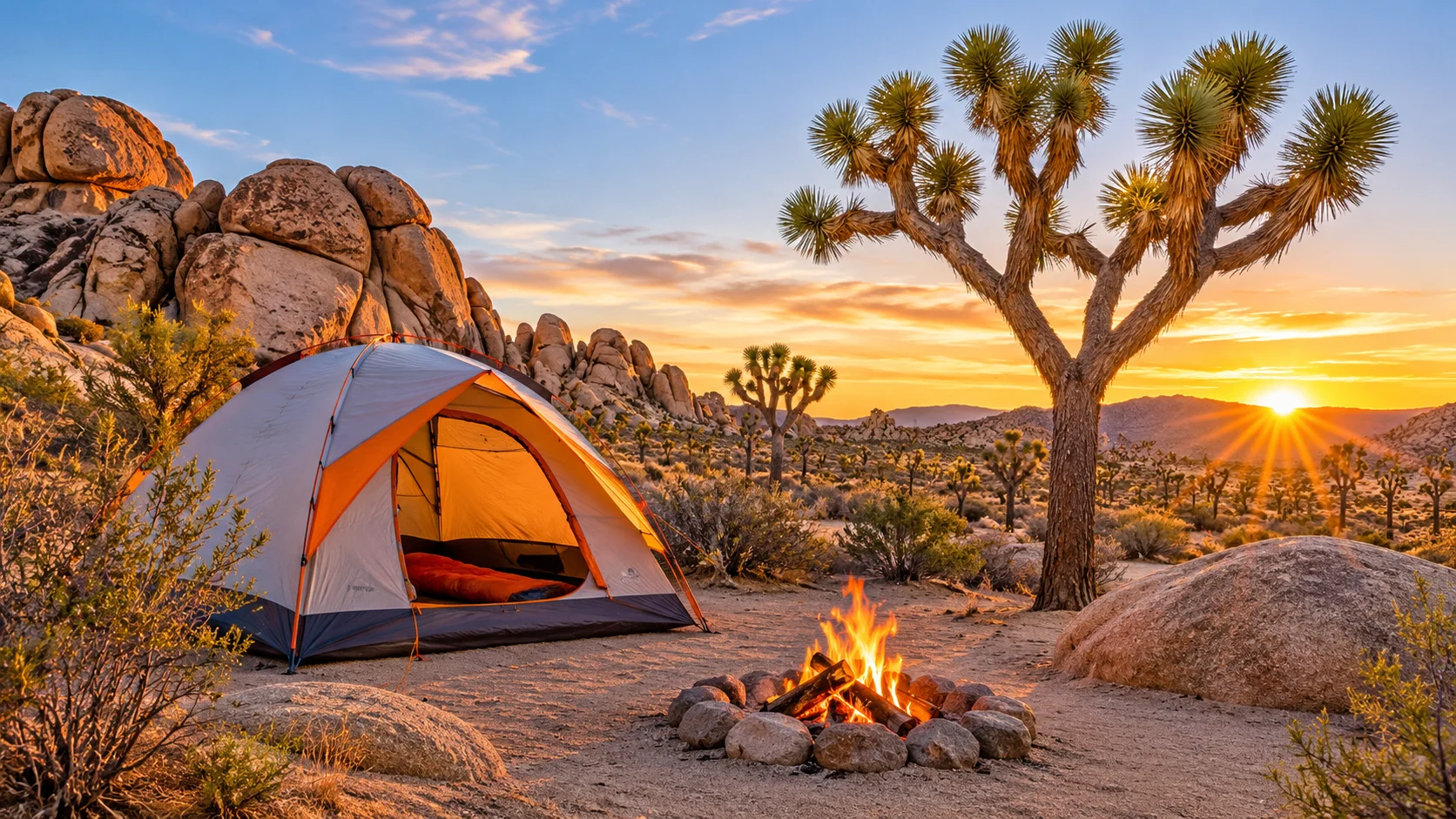
The most useful Joshua Tree camping tips are to match your campground to its booking style, reservation only or first come first serve, to carry plenty of water, and to travel between October to April, when conditions are most comfortable.
What I find helpful is treating the trip as three decisions: where to sleep, when to go and how to arrive. The hikes I mention later sit in the Mojave Desert section of the park, and dispersed camping outside the boundary gets its own section further down.
Reaching the park is simple by road. It lies about 3 hours from Las Vegas, where Harry Reid International Airport (LAS) is the usual gateway, or about 3.5 hours from Los Angeles via LAX. I would steer clear of June to August, because summer heat is punishing and campground closures have often fallen in that window.
How Do You Choose Between Reservation and First-Come Campgrounds?
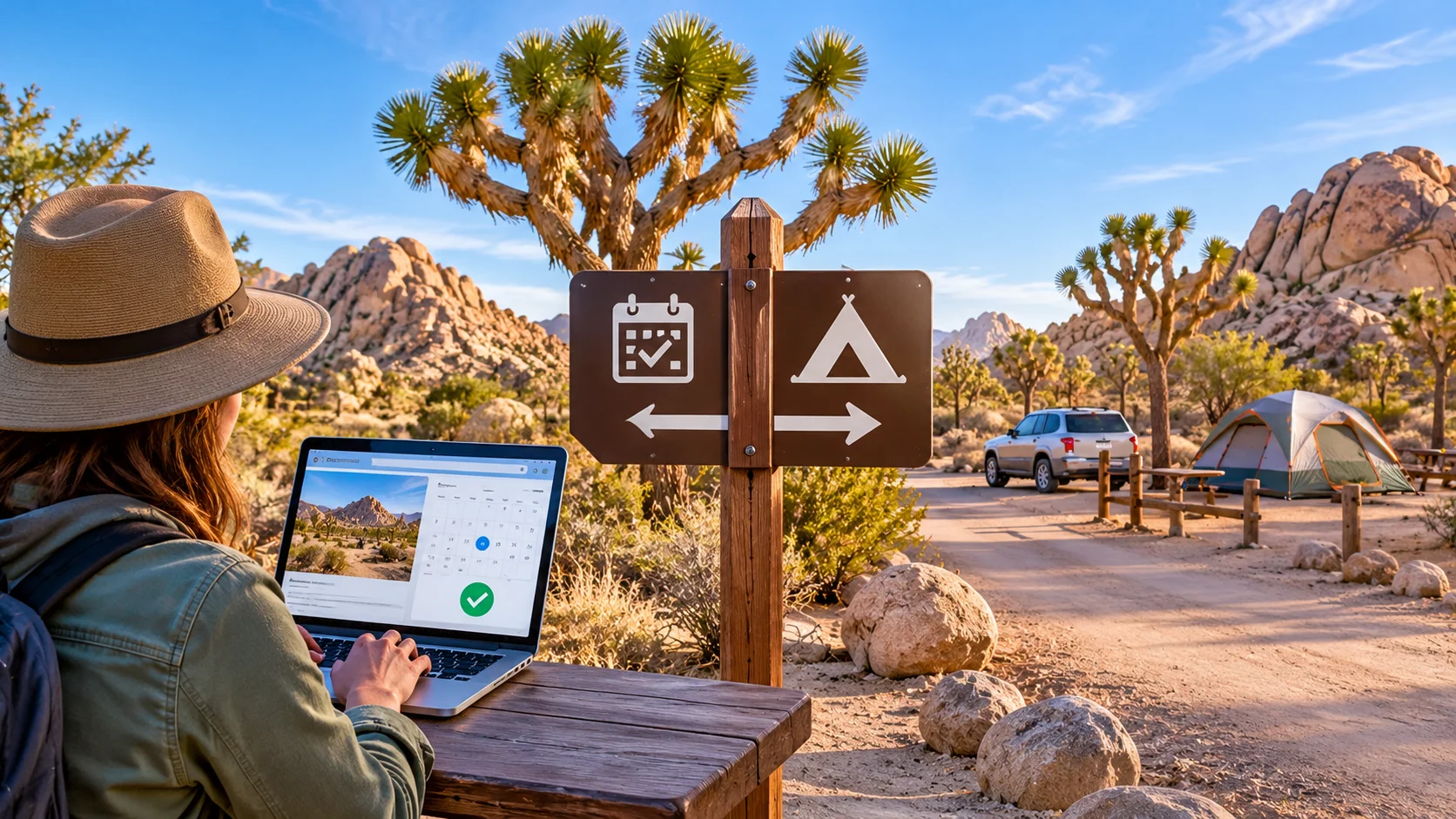
You choose among the park’s nine campgrounds by deciding how much certainty your group needs, since some take advance bookings and others fill on arrival. That is one of the first Joshua Tree camping tips I would give anyone comparing options.
I can’t speak for every site, so the table below sticks to published figures rather than rankings.
|
Campground |
Sites | Advance booking | Potable water | Cell |
|
Jumbo Rocks |
124 sites | Yes | No |
None |
|
Black Rock |
99 sites | Yes | Yes | Yes |
| Cottonwood | 62 sites | Yes | Yes |
None |
|
Indian Cove |
101 sites | Yes | No | Spotty |
|
Ryan |
31 sites | Yes | No | None |
| Belle | 18 sites | No | No |
None |
|
Hidden Valley |
44 sites | No | No | None |
| White Tank | 15 sites | No | No |
None |
Only Black Rock and Cottonwood pair water with flush toilets, which is why families who want proper bathrooms tend to look at them first. Bigger parties have another route: the park’s group sites accommodate 10-60 people, so they suit organized trips more than a couple with a small tent.
Landing a First-Come, First-Served Site Without the Stress
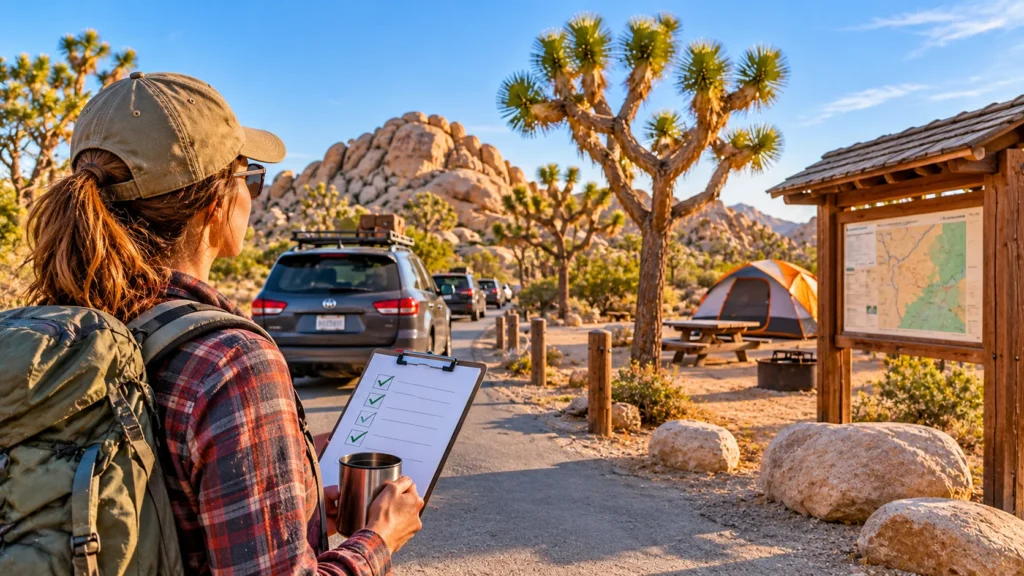
The most dependable way to land a first-come site at Hidden Valley, White Tank or Belle is to arrive early on a weekday.
This route suits a flexible schedule, and it is how you secure a spot without booking ahead. Among the Joshua Tree camping tips that save the most hassle is checking each pitch first: many nestle among rock formations that supply some shade, but campers walking back from the rocks can cut through your site, so privacy is worth weighing.
- Spend the night before on BLM land close to the park.
- Reach the campground in the morning and, if you can, during the week; camp coffee helps while you scout.
- Walk the loop before committing, then choose the site that suits your group.
Sunflower Rd on the north side starts as a dirt road that an ordinary car can manage, though farther in you would need 4-Wheel Drive and good clearance; Edison Powerline Rd serves the south side. Out there, pack everything out, because there are no trash cans. Since some sites can leave you in the sun, hats with brims belong in the car, and a customized backup plan beats a fixed itinerary.
Booking a Reservation-Only Campground Ahead of Time
Booking online ahead of time is how you get a pitch at Jumbo Rocks, Cottonwood, Black Rock, Indian Cove or Ryan.
These campgrounds accommodate tent camping, a camper van or an RV up to 35 feet, yet there are no hookups at any of them. Most use vault toilets, much like the pit toilets at first-come sites. White Tank is stricter on size, allowing RVs under 24 feet.
Booking early is also one of my Joshua Tree camping tips for busy periods, since reservation sites are the better bet for large groups. For winter camping from December to February, Cottonwood is the warmest option. At Jumbo Rocks, sites #14, 15, and 16 stand out to some campers, though most pitches there are comparably good.
Reservations extend beyond campsites: the Keys Ranch ranger-led tour, a 1.5 hours walk, is booked online as well.
Camping at Jumbo Rocks: What the Central Campground Offers
Jumbo Rocks Campground works well for families because it sits in the heart of the park, among huge rocks, with a nature trail starting at camp.

Booking happens on Recreation.gov, and same-day reservations are possible when sites are open. Fuel is the first of my Joshua Tree camping tips here: there is no firewood for sale inside the park, so I would buy bundles of wood outside before arriving. The no fires rule belongs to dispersed land, not to this campground.
The Skull Rock Nature Trail is a 1.7-mile loop that starts and ends at camp, comfortably under 2 miles. If nights run below freezing, Cottonwood stays a good 10 degrees warmer than the northern campgrounds.

Most sites tuck into big rocks and are dotted with Joshua trees and yucca plants, which give privacy but carry spines, so keep kids from brushing past. Windy spells bring blowing sand, so stake your tent well, and if you wander the rocks, be back before dark.
Camping Outside the Park on BLM Land
Open camping on BLM land lies outside the park at both the north and south ends, and it gives you a base for the night before a first-come attempt. One of the Joshua Tree camping tips I repeat most is to sleep there first.

With no facilities, the appeal is the sky. The darkness rewards stargazing and night photography, and Joshua trees against the stars make a spooky backdrop of gnarly trees.
Planning still matters. If you land after flights and car rentals, this is a convenient place to sleep before entering. Between March-May, when spring brings the biggest displays, the park is also crowded, so an early start helps.
In the cooler stretch from late November through late February, you are less likely to meet snakes or other critters. Still, watch for black widow spiders around rock crevices.
When Is the Best Time for Joshua Tree Camping?
The best time for Joshua Tree camping is the cooler part of the year, because heat and sun are the park’s biggest hazards.

The desert can swing from scorching days to cold nights, and snow is possible in winter. Sites with minimal shade, and open ground with no shade at all, make midday hot, which brings dehydration and sunburn. The usual guidance is a gallon of water per person per day for adults and half that for kids.
Timing the week matters too. Arriving before Friday afternoon eases the search for a site, and the Las Vegas route sees less traffic. On clear days with no haze, the views from the high viewpoints can stretch hundreds of miles.
Easy Joshua Tree Hikes That Suit Families
The best easy hikes for families in Joshua Tree are the Skull Rock Nature Trail, Live Oak Loop, Barker Dam Loop, Hidden Valley Nature Trail and Wall Street Mill Trail.
You will need a car to reach these trailheads, which are spread across a large park, and the Skull Rock route begins at the centrally located campground. Hidden Valley is where climbers gather, yet its enclosed trail suits the smallest kids who enjoy clambering among boulders. Barker Dam Loop passes the park’s rare water, which catches reflections at sunset.

Visitors who cannot hike can use the wheelchair-accessible viewing platform at Keys View, which needs no walking. From late February, the desert in bloom brings wildflowers, a good reason to hike then. Keep hands out of crevices, because rattlesnakes and scorpions use them. Near Ryan, the California Riding and Hiking Trail connects to a horse camp for riders.
Where to Watch the Sunrise and Sunset in the Park
Jumbo Rocks Campground, Keys View and Barker Dam are three dependable places to watch sunrise and sunset in Joshua Tree.

Almost anywhere in the park delivers striking sunsets, and the low light gives the landscape an otherworldly look. At Jumbo Rocks, the area around the amphitheater is good for photos at first light.
Barker Dam is a 1.5-mile loop with a seasonal lake, so bighorn sheep are common near the water. Wall Street Mill Trail runs 3 miles out and back past old ranch relics, and its Joshua trees, nicknamed the desert dagger, look striking.
Rather than racing around, I would settle on 1-2 rock formations and wait for the light. The granite boulders at White Tank make a strong foreground, and low sun shows the rock record that tells the park’s geological history.
Extra Family Adventures Beyond the Campground
Beyond camping, the main extras for families are a guided rock climbing lesson, a guided hiking tour and a visit to Keys Ranch. Joshua Tree camping tips often stop at the campsite, but these are worth a look. I haven’t tried them myself, so this is general information.
A guided rock climbing lesson adapts to your group size, and a hiking tour can be tailored to ability. Keys Ranch can only be explored on a guided walk booked in advance.
Wall Street Mill Trail rewards photography with its gold stamp mill, once the fastest and most modern in the area. On the Barker Dam spur, petroglyphs survive, though a film crew painted over them long ago. At Hidden Valley, cattle rustlers hid cattle in the canyon, and Live Oak Loop is named for a rare live oak tree.
Indian Cove’s ranger station at the entrance has water, though the campground itself has none. Open mine shafts remain in the park and should never be entered.
Joshua Tree Camping Tips for Kids and Desert Safety
The most important Joshua Tree camping tips for kids are to keep water close, stay within reach of help and plan for the park’s extremes.
The park’s harsh ecosystem offers little water and unreliable cell service, so preparation happens before you arrive. At campgrounds with no amenities, fill jugs beforehand for drinking, washing and cooking.
Choose trails without much elevation gain; a 1-mile loop suits the smallest kids. Nighttime brings cold, so pack warm layers.
For extra support, a four-hour family climbing session includes equipment, certified guides and wilderness first responders.
How Do I Get to Joshua Tree National Park?
Joshua Tree National Park is reached by road in Southern California, through entrances such as the south entrance beside Cottonwood and others on the north side.
The park spans 800,000 acres and is one of America’s 63 national parks, so approaching the right entrance saves time. Indian Cove and Black Rock each have a separate entrance, so you must leave and re-enter to reach the rest of the park.
From Jumbo Rocks, the town of Joshua Tree is 23 miles away and Twentynine Palms is 13 miles. Black Rock sits five miles from Yucca Valley, and Cottonwood’s visitor center sits right outside the campground. Stay on established roads, and because the park is remote, pack the 10 essentials.
Is Joshua Tree National Park Good for Toddlers?
Yes, Joshua Tree National Park suits toddlers better than many expect, because the best hikes are short and flat and invite scrambling on giant boulders.
Heat and sun exposure are the main concerns, so plan hikes for early morning, bring twice as much water as you think you need and skip summer entirely. Guard against sunstroke with sunglasses and high-SPF sunblock, even on cooler days.
The Live Oak Loop is a .9-mile loop with room for a picnic, and the paved roads through Jumbo Rocks Campground work for strollers, wheelchairs and bikes. The Keys Ranch walk is better for children 10+, so toddlers can skip it.