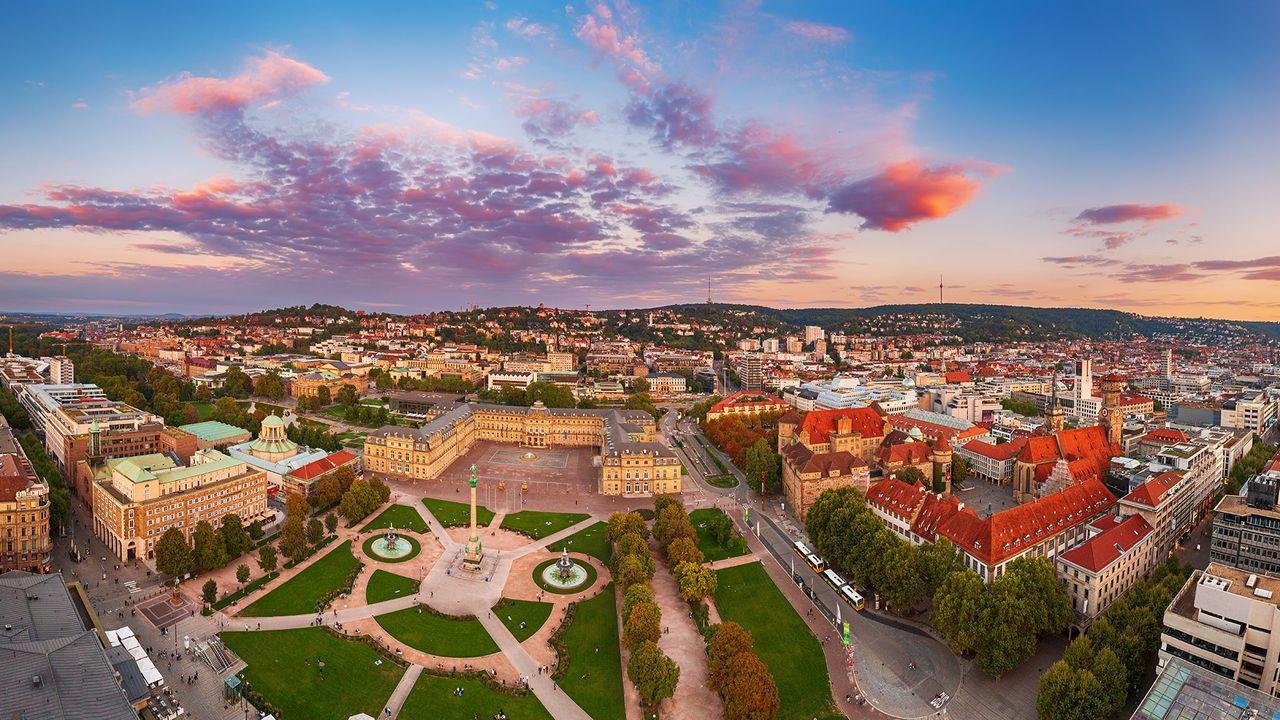
Where to stay in Stuttgart comes down to Mitte for a first visit, with Stuttgart-West, Noninverted, Bad Cannstatt and Stuttgart-Nord as strong alternatives depending on your pace and budget. Mitte is the central district, while the other areas trade a little convenience for greenery, spa waters or quieter streets.
In my experience, first-time visitors worry about this choice more than they need to, because Stuttgart is compact enough for a city break from almost any central base. Safety is not the deciding factor either: Where Sleep calls Stuttgart one of the safest cities in Germany, so the real cost of a poor choice is time lost on transport.
What I noticed when comparing districts is how differently each one spends its evenings. Mitte keeps the nightlife going around Schloss Platz, Stuttgart-West leans on its boutiques, and Bad Cannstatt works as a spa town where a mineral soak ends the day.
Design lovers get their own reason to travel. Stuttgart-Nord has the Weissenhofsiedlung, a 1920s housing complex with buildings by Le Corbusier, and The Hotel Guru also flags the area for mid-century design fans.
Which Stuttgart Neighborhoods Suits Your Kind of Trip?
When deciding where to stay in Stuttgart, match the neighborhoods to the trip: The Hotel Guru sends sightseers to Mitte and Bohnenviertel, families to Bad Cannstatt, Stuttgart-Nord, Mitte or Stuttgart-West, and anyone seeking residents’ company to Stuttgart-West or Stuttgart-Nord.
| Travelers type | Neighborhood’s to consider |
| Sightseeing | Mitte, Bohnenviertel, Stuttgart-West, Stuttgart-Nord |
| Families | Mitte, Stuttgart-West, Bad Cannstatt, Stuttgart-Nord |
| Quiet stays | Bohnenviertel, Bad Cannstatt, Stuttgart-Nord |
| Couples | Bohnenviertel, Bad Cannstatt |
| Local company | Stuttgart-West, Stuttgart-Nord |
When I plan for families, I start with Bad Cannstatt because the zoo is there. Then I look at Stuttgart-Nord, whose landscaped park adds a petting zoo and a miniature railway. Mitte also earns its place, since the Stuttgart Opera is among its main attractions.
Stuttgart-West’s best-known photo spot is the neo-Gothic Johanneskirche, which overlooks the Feuersee. Bohnenviertel’s name translates to Bean Quarter, a nod to the garden beans its less well-off early residents grew to supplement their diets.
Where Sleep puts Mitte rates from about €75,00 per night, against €60,00 in Stuttgart-West, Bad Cannstatt and Stuttgart Ost. If sightseeing is the plan, a Stutt card Plus is worth checking as a way to save money.
How Stuttgart’s Layout Shapes Your Choice
Stuttgart’s layout matters because the city sits in a hollow ringed by slopes, so your neighbourhood decides how much transport and climbing fills each day.
When I weigh where to stay in Stuttgart, I treat distance from the center as a cost. Where Sleep advises steering clear of very peripheral neighborhood’s, because the extra public transport time eats into a short trip.
Mitte concentrates the culture. The Cultural Mile holds most of the theatres, museums and galleries, including the Old State Gallery and the New State Gallery. Most central architecture dates from the 1950s and 60s, since much of the area was rebuilt after bombing.
Bohnenviertel is the exception. It escaped the bombing, and its antique shops and second-hand bookshops keep the old character. The quarter grew around trades such as tanners, butchers and smiths, which needed running water close by.

Vine country is close too. Where Sleep describes a walk through the vines in Muhlbach, only minutes from the main station, as a countryside feel inside the city.
Is Mitte the Best Base in Stuttgart?
Mitte is the base both The Hotel Guru and Where Sleep recommend for first visits, because it puts landmarks, shopping and a wide range of accommodation within walking distance, though it is busy and one of the pricier areas.
The Neues Schloss, a Baroque 18th century palace, faces the Altes Schloss, which dates to the 10th century and now houses Stone Age finds as a museum. For art, the district’s gallery holds an impressive Old Masters collection, and the City Art Museum covers contemporary work.
Bohnenviertel, inside the district, has taverns serving local food, and Theodor-Heuss-Strasse, nicknamed the party mile, is another stretch Where Sleep names for going out. That mix is why Mitte tops my own list of where to stay in Stuttgart for a first visit.
With children I would choose the Oberer Schlossgarten side of Mitte, which Where Sleep describes as greener and quieter than the rest of the district. For apartment stays, the ALFA Apartment Stuttgart Mitte appears in its picks.
History runs deeper out in Bad Cannstatt, where the ruins of a Roman fort recall AD 98, when the Romans first made the area popular for its waters.

Bohnenviertel for Old-Town Charm and Evening Drinks
Bohnenviertel suits couples and anyone chasing a village atmosphere, because this small, central neighbourhood keeps a small town feel and a cluster of traditional places to drink.
A romantic break works well here. The cobbled streets and wine bars sit inside Stuttgart’s historic centre, and the quarter escaped WW2 bombing, so its charm is original rather than rebuilt. For older architecture elsewhere, half-timbered Bad Cannstatt is the alternative, though I would still pick Bohnenviertel for an evening wander.
I like to order Maultaschen, the Swabian ravioli, and plan an afternoon of wine tasting before dinner. For later, Where Sleep lists Jigger & Spoon and Sky Beach among Stuttgart’s best bars for a night out.

One luxury hotel near the main station even has a cigar lounge, a useful backup on a rainy evening. Still, the neighbourhood’s real appeal is walking its lanes.
Stuttgart-West for Leafy, Hip Stays

Stuttgart-West suits travellers who want a walkable, leafy base with a hip atmosphere and good transport links, according to The Hotel Guru.
If I had to name where to stay in Stuttgart for café culture and green space, this district would be on my shortlist. The Gründerzeit architecture is elegant, and it echoes the grander 19th century buildings of Kernerviertel over in Mitte.
It is also where I go for meeting locals, as The Hotel Guru calls it one of the most desirable neighbourhoods to live in. After dark, late-night drinking spots are the draw, and across town in Stuttgart-Ost, Kraftpaule is listed by Where Sleep for craft beer.
The Central-Classic Hotel is a 3-star option about 10 minutes’ walk from the old town, and Ferienwohnung West is a Where Sleep pick for apartment stays. One hotel I weighed sits beside the Budapester Platz stop on the U-Bahn, a reminder of how well this side of town connects.
Compared with Degerloch’s elegant houses, the streets feel more urban. The Bismarck Tower in Stuttgart-Nord is the better viewpoint if heights matter more than cafés.
Where to Stay in Stuttgart for Spas and Museums: Bad Cannstatt

Bad Cannstatt is the district to pick for spa visits and museums at a lower rate, even though it sits off-centre.
Its mineral waters trace back to the Roman era, and the Romans also brought grapes and planted the first vines on Stuttgart’s hills, which started the local viticulture. Modern spa life centres on the thermal baths, which suit a slow evening after a museum day.
I compared one Hilton property within walking distance of a major museum there. It takes 25-30 min by public transport to reach the centre, and a Hilton Honors rate applied. Motel One Bad Cannstatt is the low-cost pick on Where Sleep’s list.
Culture hunters should know that the Wagenhallen, a former tram depot that hosts events and exhibitions, is in Stuttgart-Ost. I would finish a Bad Cannstatt day with a picnic in the Schlossgarten, which reaches towards the river.
Stuttgart-Nord for Views and Quiet Streets

Stuttgart-Nord suits a peaceful break, because it is a hillside neighbourhood just outside the centre, with parks, local wines and food, and wonderful views, per The Hotel Guru.
When I rank where to stay in Stuttgart for outlook, I compare viewpoints rather than rooms. Stuttgart-Ost adds Karlshöhe Park and Uhlandshöhe, which Where Sleep recommends for panoramic views, and the gardens of Villa Berg are another green stop. Families can pair those with the play areas in Degerloch’s parks.

For a full 360-degree outlook, the Fernsehturm, the world’s first TV tower, looks over the Black Forest and Swabian Alps.
On the hotel side, Short Girl Travels’ pick had rail yard views from the 7th floor, but only one elevator was working. I now check access before choosing a high floor.
Stuttgart-Ost for a Lived-In Feel
Stuttgart-Ost suits visitors who want local vibes, because Where Sleep describes it as very local and less touristy, in a city not yet discovered by mass tourism. If you are deciding where to stay in Stuttgart away from crowds, this is the district I would test first.
The trade-off is that it can feel quiet, so I plan evenings elsewhere. Where Sleep names Fou Fou, O’Reilly’s, Muttermilch and BIX Jazzclub among Stuttgart’s best clubs and bars. Daytime culture can include the Naturkundemuseum, the Natural History Museum in Stuttgart-Nord.
When I book, I check small comforts first: a kettle in the room, whether breakfast is included, reliable A/C, and free bag storage on arrival and departure days. Short Girl Travels flagged A/C complaints at all three hotels it considered, which is why that item sits high on my list.
For lower rates, Where Sleep lists Hotel Zuckerfabrik among mid-range stays and Alex 30 Hostel among low-cost ones.
Is Degerloch Good for Families?

Degerloch is a solid choice for a whole family, since Where Sleep recommends it especially for families and describes the district as immersed in nature south of the centre.
Stuttgart sits at its lowest point locally, in a basin often called the pot or the cauldron, and the ground climbs steeply towards districts like this one. The Zacke, a historic rack railway, takes visitors up the hill, which makes the climb a small attraction in itself.
When I plan family days from here, I mix the district’s calm with bigger stops. Bad Cannstatt’s Wilhelma Zoo and Botanic Gardens is described by The Hotel Guru as the second largest in Germany after Berlin Zoo. Stuttgart-Nord’s Höhenpark Killesberg is home to the Killesberg Tower, and the SchweineMuseum, the Pig Museum, offers a lighter change of pace.
Green-minded families can add Red Deer Park, the old royal hunting park known as Rot-und Schwarzwildpark in Stuttgart-West.
Hotel Choices Worth Comparing in Stuttgart

For a hotel base, Hampton by Hilton Stuttgart City Centre, Hilton Garden Inn Stuttgart NeckarPark and Steigenberger Graf Zeppelin cover three different priorities: transit access, museum proximity and a luxury address.
| Hotel | Transit | Breakfast | Main drawback |
| Hampton | U-Bahn stop outside | Included | Only one elevator working |
| Garden Inn | Walking distance to the Mercedes Benz Museum; 25-30 min to the centre | Not included | Rooms look basic/dated online |
| Steigenberger | Directly across from the main train station | Not included | Loud construction nearby |
In my experience the museums drive the decision. The Mercedes-Benz and Porsche museums pull people north and east, and Gottlieb Daimler, who The Hotel Guru says lived and tested the first car in Bad Cannstatt, is part of that story.

The Hampton has limited parking, but public transport, including buses and trams, covers what a hotel lot cannot. For luxury, Where Sleep points to Le Meridien and Hotel Azenberg.
Connectivity matters even when rooms are fine. Major squares have free wifi, on the network named free-wifi-stuttgart (official).
Where to Stay in Stuttgart by Budget and Style
Stuttgart accommodation splits into luxury hotels, mid-range stays, low-budget options and apartments, and the right tier depends on how long you stay and how many people share the room.
In Mitte, Motel One Stuttgart-Mitte sits 200 metres from the central station and 5 minutes’ walk from Schlossplatz. I lean toward apartments for longer stays: Stuttgart City Apartment B, listed in Stuttgart-West, is 1,3 km from the Stock Exchange and 2 km from the central station. Bohnenviertel adds small hotels and aparthotels.
In Bad Cannstatt, Premier Inn Stuttgart Bad Cannstatt and Hotel Spahr, a family-run hotel with a 24-hour reception, are the names Where Sleep lists. In Stuttgart-Ost it lists CLOUD No7 LOFTS, and in Degerloch Hotel Waldhorn, alongside B&Bs.
My own rule is to book early when the Spring Festival, Folk Festival or Cannstatter Wasen is on in Bad Cannstatt, though that is observation rather than a published figure.
Should You Stay Outside Stuttgart Instead?

Staying inside Stuttgart is usually the better call, because Where Sleep notes it saves a lot on accommodation, though Ludwigsburg and Leonberg work for travellers who want greenery.
I rarely find that the answer to where to stay in Stuttgart is outside the city. Ludwigsburg is known for Baroque castles and gardens, while Leonberg is very quiet and green. Out there you get wonderful nature and vineyards, but you give up the walkability of the centre.
To see the trade-off, compare Degerloch. Its metro lines U5, U6 and U12 take 13 min, and its cycle paths help, yet it has no train stations, so a vehicle of your own is useful.
Even Schloss Solitude needs a bus: line 92 to the Solitude stop takes 22 min. The airport is 12 km from town, and the S-Bahn reaches the main train station in about 20 minutes. Where Sleep also suggests Uber over driving because of traffic.
Things to Do Near Where You Stay

The most practical things to do in Stuttgart sit close to each neighbourhood, so you can build days around shopping streets, a market hall, mineral baths and hillside stairs near your hotel.
Once I settle where to stay in Stuttgart, I pick one anchor activity per day and let the rest follow. Mitte’s main shopping street is the obvious start, a pedestrianised stretch, and Bohnenviertel is where I would try Swabian cuisine.
- Königstraße: a shopping street 1.2kms long, closed to traffic.
- Markthall: an Art Nouveau era food market in Mitte.
- MineralBad: a Bad Cannstatt spa for relaxing after the museums.
- Stäffele: an estimated 400 hillside stairways, built for the slopes’ vines and now links between neighbourhoods.
In Stuttgart-West, Bismarckplatz is a good place to sample local baked goods. A walk towards the Neckar River along the green belt rounds out a free day.
Practical Tips for Getting Around and Going Out

Public transport is the practical way around Stuttgart, because S-Bahn and U-Bahn lines cover most trips and a car is not recommended given the traffic, according to Where Sleep. Bikes are commonly used, so a bicycle is a realistic option too.
From Bad Cannstatt, lines S1, S2 and S3 reach the main station in 3 min. For day trips, Ludwigsburg is 15 km / 20 min out on the S5, and Leonberg is 18 km / 25 min away, with a 30 min ride on S6 or S60.
Narrow streets in older quarters make driving awkward. One luxury hotel charges a fee for an airport shuttle, so I compare that against the S-Bahn before booking.
For going out, young travellers can pair Mitte with Stuttgart Ost. Stuttgart-West’s late-night cocktail bars and a Filderhöhe drink stop in Degerloch widen the options.